SAMHAIN – Calendar Customs
Of all the calendar customs we still preserve in Ireland, Samhain/Halloween must be counted as one of the most authentic. The very powerful connection we Irish have with death and the dead is pretty close to being unique. This becomes more obvious when, for example, an English cousin joins us for an Irish funeral and wake. He cannot comprehend an open coffin in the house and he generally misses the nuances of the apparently casual way neighbours can sit around chatting and sipping tea while the corpse is still present.
Samhain is yet another time we show our old connections and traditions. This is a measured time to muse on death and not wait to meet it as a stranger.
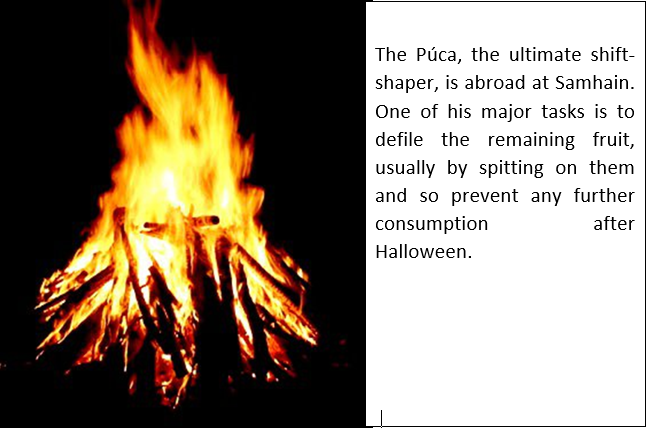
In October we are eminently aware of the changing seasons and the shrinking of days. Nature is retreating, bonfires were once are lit in defiance of the gathering darkness. Indoors, good company, tasty food and bright lights lift the mood. Technology, giving us warm clothing and heated houses ensures we no longer have the same concerns as our ancestors.
We have learned how to deal with winter. We are probably still perfecting how to deal with death.
The Calendar Seasons
- Samhain November 1st and the commencement of the Gaelic Year
- Imbolc February 1st Birth and new life
- Bealtaine May 1st Planting, growth and a fresh harvest anticipated
- Lughnasadh – August 1st Fruition of work and harvesting
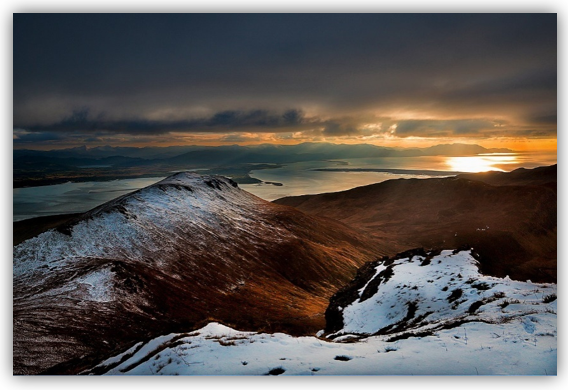
Historic Samhain was the festival of the dead, and the beginning of the Celtic new year.
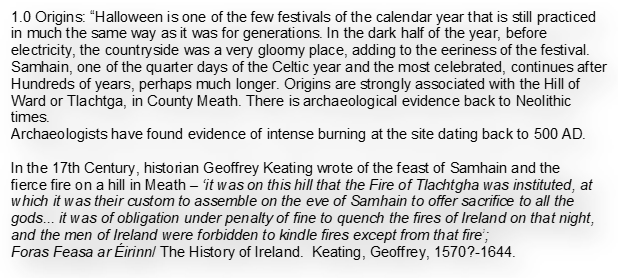
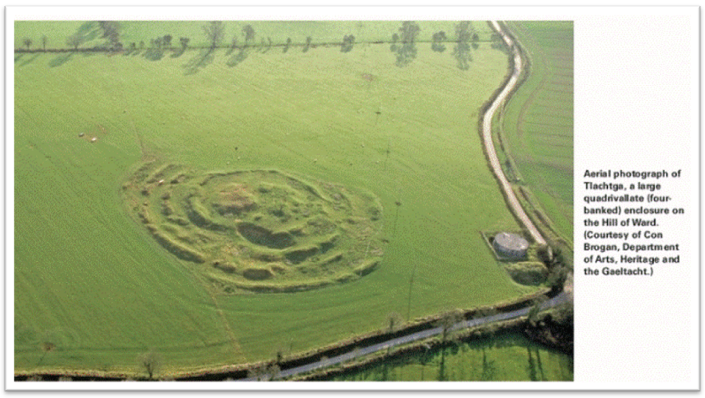
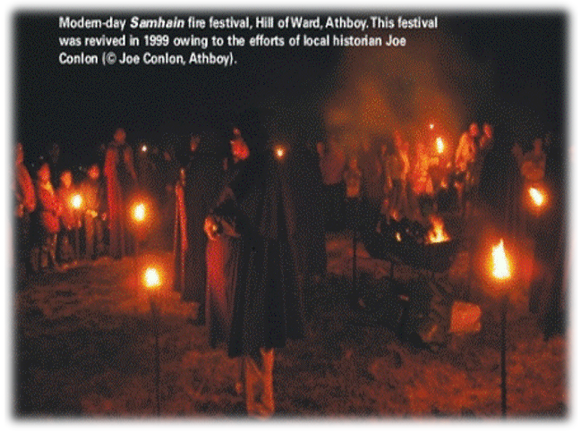
1st November – Samhain/All Souls/Halloween: Samhain is also All Saints’ Day, is the first of the quarter days in the Celtic calendar and the beginning of the Celtic Year. There is a crowded schedule in the early days of the Irish winter. In the past, the Celts lit the first fires of winter on the Hill of Ward/Tlachtga at Samhain. Torchbearers then carried the flame across the land, passing it from one lighted brand to another.
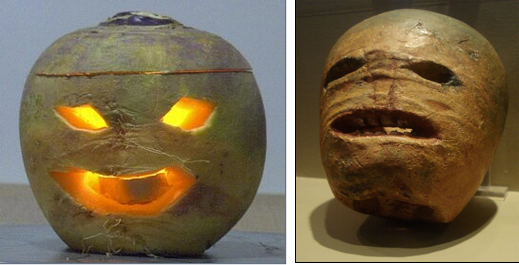
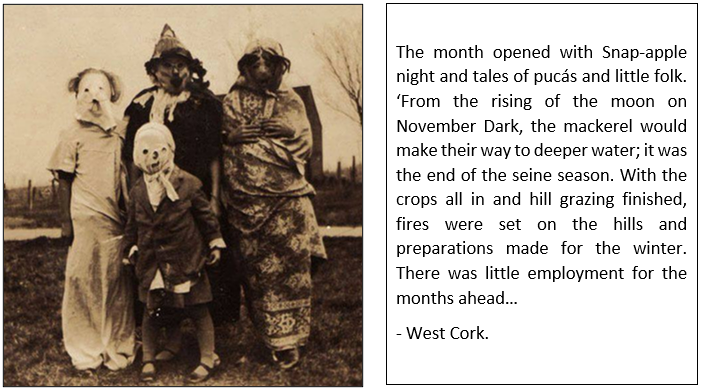
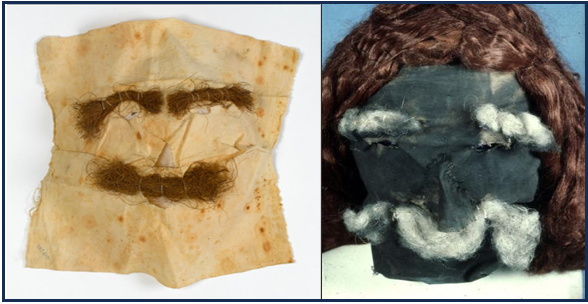
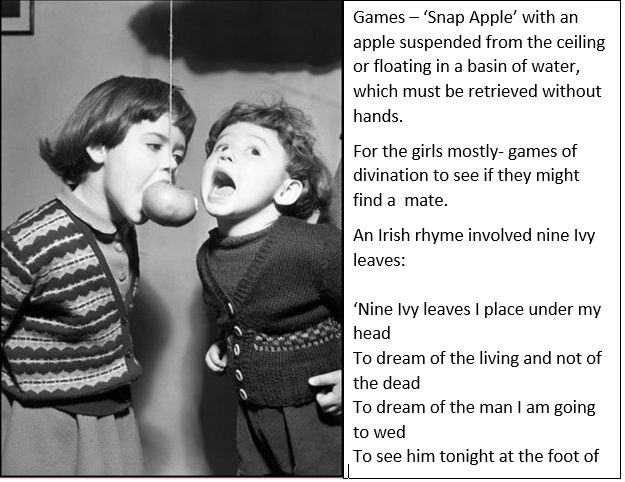
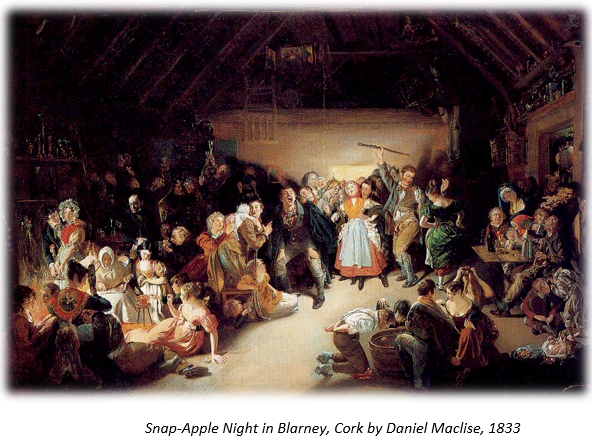
Before perfecting harvest techniques and the storage of grass (hay) over winter, surplus animals were slaughtered at Samhain amid great feasting. Irish people firmly believed that the dead visited on Samhain night. In modern times, there was a tradition of placing a candle in the window to guide spirits home, while leaving out three glasses of freshly collected spring water for them. The belief in the thinning of the veil between living and dead led to the now popular Halloween. Throughout the country, the night is celebrated as ‘Snap-apple Night’, mostly based in the home. In some districts youngsters, mostly boys, would go from house to house in grotesque masks and costumes to frighten away the ghosts.
Internationally we have the Hindu Diwali and the Mexican Día de los Muertos, Day of the Dead that coincide with Samhain.