Creevagh (An Chraobhach) Townlands

The name Creevagh is usually associated with ‘bushy land’ (Craobhach) but in the case of the Quin townlands, its origin is supposedly attached to the Creagh family name. They have had a presence in this area since Cromwellian times, residing mostly in the nearby Danganbrack townland. This particular family was given this land in compensation for loss of title and properties in Limerick City. The Down Survey recorded this land as Creevagh within the same period of time and the name pre-dates the land appropriation. More information on the Creagh family can be found elsewhere and at the end of this post.

Creevagh More is contained within an area of 1.35 square km’s or 335 acres, while Creevagh Beg is contained within an area of 0.95 square km’s or 234 acres. Creevagh was one townland originally but later divided into the two we have inherited today. The first recorded separation of the townland is in 1727. It has always been sparsely populated and remains like that today, agriculture being the main use. The presence of the big houses of Abbey View, Dangan Castle and Creevagh dominated the larger of these two townlands.

Down Survey Name & records

The Down Survey was undertaken (by soldiers)to facilitate the transfer of properties from the original owners to soldiers and ‘adventurers’ (despite the fact that Clare was supposed to have been reserved for transplanted Catholics). Information was laid ‘down’ in map format from 1651 onwards. Two records can be traced but these may not coincide with what we now refer to as Creevagh More and Beg.

Down Survey Name: Creevagh. 1641 Owner(s): Dr Thomas Arthur (Catholic). 1670 Owner: Dr Edmund Marae(Protestant). 1659 Census Total: 61 of which English: 61 (note that ‘English’ here may refer to allegiance rather than nationality ie the number in inhabitants who have stated allegiance to the crown and have undertaken to abide by the new order).

Down Survey Name: Creaghanenashynagh(!). 1641 Owner: Sir Rowland Delahide(Catholic). 1670 Owner: James Power(Catholic). Profitable land: 39 plantation acres, Forfeited: 39 plantation acres

County Clare was one of the western counties reserved for displaced loyal Catholics. One third of Irelands land mass was already under Protestant ownership on Cromwells arrival, mostly on the east coast, so most displacement occurred in remaining midlands and towns to areas like Clare. These were usually people of property. Note that ‘owner’ referred to above may have a different connotation to ‘property’ owner (eg ecclesiastical, magisterial).

 In 1582 the townland is recorded as ‘ann sa Croibigh (Abhainn sa Craobhach?) in a manuscript HID Leathanach: 55 


Creevagh More

Although Dangabrack (An Daingean Breac) Castle is associated with the townland after which it is named, the entrance driveway cuts through Creevagh More.

1855 Occupiers and lessors recorded in Griffiths valuation : Carmody(2), Mullins, Corbett(2), Scanlan(3), Slattery, Meaney, Moylan, Neylan, Cooley, Scott (see https://landedestates.ie/estate/1786 )

1891 Census: Population 50 persons

1901 family names recorded in Creevagh More: Corbett, McNamara, Burke, Singleton, Carmody, Scanlon, O’Donoghue, Moylan, Meany (50 persons)

1911 Census: 36 persons (18 male, 18 female)


Creevagh Beg


1825 Tithe payees in Creevagh Beg

Tithes were a tax on agricultural produce which was payable by the occupiers of agricultural land. They were the main source of income for the parish clergy of the Church of Ireland (the largest Protestant church and the church established by law). 

Tithe Applotment family names: McNamara(3), Power(3), Hickey(1), Hallaran(1), White(1), O’Dea(1), Fleming(1), Adams(1), Moran(1), Moylan(1)

Note: There is only one family name recorded within Creevagh More(Grevaghmore): Sett

1855 Occupiers and lessors recorded in Griffiths valuation : Power(2), Savage, O’Dea(2), McNamara, Lyons, Lynch, Callaghan, O’Callaghan, Hawe

1891 Census: 61 persons

1901 Census: 44 persons

1911 Census: 32 persons (17 male, 15 female)

Creevagh Ringforts

Ringforts were enclosed farmsteads which can date back to 500 BC. They are usually circular in plan and can measure from 20 to 60 metres in diameter. They were enclosed by one or more earthen banks. 

Creevagh More: (CL034-14401): Across the river an extent of rich meadow and tilled land surrounds a gently rising hill on which is a remarkable fort. The fort on the summit is a circular ring-wall; the faces are nearly destroyed; but enough remains among the heaps of filling (15 to over 20 feet wide, and 3 or 4 feet high) to show that it was from 12 to 16 feet thick, and apparently in one piece, the double wall not, so far as I know, occurring in this group. The garth is 102 feet wide, and the whole ring about 130 feet across. 

Westropp 1909

“Most of the forts have garths practically level with the field, or, at most, slightly terraced up like the saddle-backed Knockadoon, or the Rath of Creevaghmore, the latter having beside it on the summit of the slope, a stone fort like a citadel, and evidently the earlier of the two, as the lower earth-work runs down the slope, and is adapted to the caher.

Creevaghbeg (CL034-15403/-146) Beside the faint traces of two small forts at the Rine, there is another caher, thickly planted with hawthorns, near the great fort. It has a wall greatly dilapidated, nearly circular outside, evidently 12 feet thick; but the debris is heaped outside for 16 feet more; the garth is 78 feet across. It has a curious feature worth recording. The inner 33 face of the wall is nearly intact, and is built in short straight lengths about 40 feet long, forming a fairly regular hexagon. Elsewhere measured as 84 feet internal diameter; walls, 7 and 8 feet thick; door, E.N.E., and described as a Caher.

Westropp 1909

“There was a stone fort in Creevaghbeg in the later seventeenth century, called Caherumine in the “Book of Survey” in 1655; Cahermine, Cahermunigan, in a grant of 1660, Caherbane in 1675 and Cahermine in 1679. If these forms give us Cahermeane, “the middle fort,” they probably refer to the above caher, it being near the middle of the townland with other forts around it. Caherbane would still be a very appropriate title, as, on a sunny day, its white limestone walls form a conspicuous object.”

For more information on this topic see https://ebw.pms.mybluehost.me/ancient-forts-around-quin/

Abbey View House-Creevagh More

Abbey View house was lived in by the Reverend Patrick Corbett until his death in 1893, aged eighty-seven. He was the nephew of the Most Reverend Patrick MacMahon, Roman Catholic Bishop of Killaloe, who died in 1836. The house was standing in 1841. A new twentieth-century house stands on the original site, the property of the Enright family.

Associated families:  O’Brien, Reynolds (Abbey View, Co. Clare 1802), Corbett, Conway, Enright. 

Another ‘big-house’ called Creevagh House existed in this townland and was ‘in-ruins’ at the time of the first OS survey. Little is known of this house.

Creevagh Bridge

Marked on the first OS 6” map as Creevagh New Bridge, it was also colloquially known as ‘The Wailing Bridge’. The road crossing the River Rine brought travellers from the west via Crusheen to Kilmurry and on to Limerick. It was the point at which departing emigrants heading to the emigrant boat in Cobh left their families behind.

From 1930’s Schools Folklore Collection:

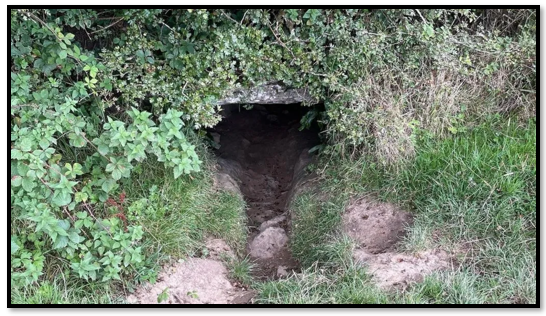
Poulnamuck (Poll na Muc) Creevagh More. In the bad times there lived a poor man who had a large family near the Caves in Abbeyview, Quin. As he wasn’t allowed to keep any fowl, he had neither cock or hen to kill, to shed blood in honour of St.Martin. He had one pig and on St.Martin’s Night in order to honour the Saint he said he would “bleed” the pig .The pig bled to death, but on the following morning, a sow with a litter of bonhams, came out of one of the caves, into his yard.From that day to this, the cave is called Poll na Muc. Informant: John Sammon

Patchen na Cainnte. There was an old man living in Creevagh named Patchen na Cainnte he used to go out at night and dance a hornpipe with his shadow and when finished he would say, is breagh an rinnce é sin. 

Collector: Joe O’Halloran, Informant: John O’Halloran


Creagh Family name

The townland name has its origin in the Irish word Craobh, meaning branch of a tree. The story goes that the Creagh clan wore laurel tree branches in their helmets going into battle, leading to the creation of the family name (Creagh/Craobhach). The family name is said to have existed in this area since ancient times, if so, is this the same family that were transplanted to here from Limerick or an attempt to insert the family into the local history, folklore, placename?

Under the Act of Settlement, Pierce Creagh (a Roman Catholic) was awarded the McNamara lands at Dangan Castle and Knappogue. Creagh was a former Mayor of Limerick in 1651. He died at Dangan in 1670. His great grandson, also Pierce Creagh, married three times and was survived by three sons. The eldest, Robert Creagh of Dangan, was succeeded by his nephews, Richard, and then, Cornelius Creagh, who owned over 6,000 acres in County Clare in the 1870s.  Most of the Creagh estate was in the barony of Burren, parishes of Killeany and Kilmoon and in the parish of Quin, barony of Bunratty Upper.

https://creaghefamilyhistoricalsociety.com/family-of-creagh/

https://visual.cso.ie/?body=entity/ima/cop/2022&boundary=C04172V04943&guid=c5d5c3ac-740d-4eae-a3b7-460bcefb21ab

Other Website references

https://clarelibraries.ie/services/local-studies-genealogy-and-archives/

https://downsurvey.tchpc.tcd.ie/down-survey-maps.php

https://ebw.pms.mybluehost.me/

https://historicgraves.com/search/node/Creevagh for information on some of those from Creevagh buried in local cemeteries.

Mick Maguire

August 2024
This once highly populated townland has been called by various spellings of its English name since first recorded in the inquisitions in 1586. Sometimes it was found with East or West added. Its current official Irish translation derives from Cé, meaning quay, which belies explanation given the situation of the townland. The inquisitions in 1641 recorded it as ‘Ceab’ while John O’Donovan, in 1839, suggested Ceabhach/Céabhach meaning ‘a land producing marshy grass’, both of which make a lot more sense!

Today, we could count the number of families living here on two hands. The figures given for baptisms and past census give a totally different picture of what it harboured in the past when up to 26 families lived here.

88.6 hectares / 0.88km²/0.34 square miles/219 acres

This townland is situated both sides  of the road to Ennis having left the village.

Inchiquin Papers – extracts referencing Keevagh

13-14 June 1699. Lease and release by John Durey to Sir Donough O’Brien, 1st Bart. of 24 acres in Keevagh, parish of Quin, barony of Bunratty in consideration of £40.

In 1703 Sir Donough purchased from the Commissioners for Sale of Forfeited Estates the lands of Keevagh, Daganbrack, Creevagh, Cahercalla, Maddara and Kildrum, totaling 440 acres, formerly held by Nicholas Arthur, who was attained for treason on account of his adherence to James II.

Land transfers in Keevagh in 1641

Freeholders in 1821

Keevagh: Laurence Corbett, James Corbett, Patrick Cody, James Halloran.

Keevagh West: H. Rev. Fitzgerald (resident in Dublin).

The above List of Freeholders contains the names of landholders who were registered to vote in Keevagh in 1821. A freeholder was a man who owned his land outright (in fee) or who held it by lease which could be for one or more lives (for example, his own life or for the lives of other people named in the lease). A significant percentage of the population was included in freeholders’ lists in the time period covered by this list (1796-1820), when both Catholic and Protestant 40 shilling freeholders were qualified to vote. A 40 shilling freeholder held a freehold worth at least 40 shillings per annum above the rent, enabling the inclusion of substantial farmers in the voters’ list. In 1829 the franchise level was increased to 10 pounds (there were 20 shillings in a pound), thus barring the 40 shilling freeholders whom Daniel O’Connell had mobilized and consequently confining the vote to landlords.


Occupiers of land in Keevagh on 1st May 1825 – eligible for tithe payments

Keevagh East: John Massey, John Doolaghty, Widow McNamara, Tim McGrath, James McGrath, John Moylan.

Keevagh West: James Boland, Patt Hallaran, Michael Downes, Cody Denis, Lawrence Corbett.

 Census Records for Keevagh

1841 Census: Population 140; Households 26

1851 Census: Population 31; Households 4

1861 Census: Population 42; Households 6

1871 Census: Population 29; Households 7

1881 Census: Population 17; Households 4

1891 Census: Population 11; Households 3


1901 Census: Population 7; Households 2

John & Mary Burke, nephew Patrick Gallagher.

Patrick Hogan, niece Delia Hogan, grand nephews Patrick & Michael Hogan.

1911 Census: Population 7; Households 2

Thomas & Catherine Moylan, servants Mary O’Callahan, Matthew Moloney.

Bridget Hogan, sons Patrick & Michael Hogan.

1926 Census: Population 13; Households 2

Thomas Moylan Head Married English Only
Catherine Moylan Wife Married English Only
Mary A Moylan Daughter   English and Irish
Cecelia Moylan Daughter   English and Irish
Patricia Moylan Daughter   English and Irish
Kathleen Moylan Daughter   English and Irish
Francis Moylan Daughter   English Only
Anne Gregan Sister in Law Single English Only
Matilda Custy Servant Single English Only
John Burke Servant Single English Only
Bridget Hogan Head Widow English Only
Pat Hogan Son Single English Only
Michael Hogan Son Single English Only

Some Baptisms in Keevagh in 1800’s

Date Child’s Forename Father’s Surname Father Mother Sponsors
15.12.1844 Thomas (?) Michael McGrath Mary John Curtin, Margaret McGrath
05.04.1832 Margaret Boland James Flanagan Briget Briget Quigly
??.06.1837 Bridget Boland James Flanagan B. Michael and Briget Cody
31.01.1840 Mary Boland James Flanagan Bridget Bridget Boland
06.04.1843 Pat Boland James Flanagan Bidy Pat Boland, Bidy Boland
25.01.1827 Briget Boland Pat Flanagan Mary Denis Carly(?), Margaret Carley(?)
10.05.1829 Michael Boland Pat Flanagan Mary Briget Boland, Michael Kitchin
27.10.1831 Pat Boland Pat Flanagan Mary Nancy McNamara, Thomas Halloran
19.10.1843 Kity Boland Pat Flanagan Mary Pat Halloran, Bidy Flanagan
??.08.1838 James Boland Pat Flanagan Mary Michael Downs, Mrs. Boland, Janes
??.05.1836 Margaret Boland Pat Flannagan Mary Dennis and Briget Cody
18.04.1828 John Boland Patrick Flanagan Mary Denis Cody, Briget Corley
15.10.1844 Mary Boland Patt Flanigan Mary Bridget Cody
05.03.1847 Mary Boland Patt Flanigan Mary Mary Donohoe
07.09.1825 Catherine Brick John Halleran Mary James Boland
03.02.1822 Bridget Brick John Halloran Mary Patrick Cody, Sally Halloran
26.09.1816 Michael Brick John Halloran Mary John Halloran, Honora Boland
29.08.1817 Michael Brick John Halloran Mary John MacNamara
22.04.1828 John Brick(?) John Halloran Mary Anne Halloran
05.08.1830 James Bricke John Halloran Mary Michael McNamara, Hanagh Lawler
14.01.1844 Patt Coady John Donoughue Mary Patt Corbett, Sarah MacNamara
21.09.1842 Michael Coady(?) Denis Lawler Judy Pat Corbett, Bidy Corbett
11.04.1845 Susan Cody Dennis Lawler Hannah John Hennesy, Mary Clune
03.10.1848 John Cody Dennis Lawler Susan Margaret Cody
08.05.1842 Nancy Cody John Donohoe Mary Denis Coady, Bidy Coady
27.05.1846 John Cody John Donohoe Mary Lawrence Downes, Kate Downs
23.06.1850 Mary Cody John Donohoe Mary Patt Corbett, Margaret Cody
29.11.1816 (?) Cody Patrick Fraly Pat Boland, Betty Cody
23.06.1850 Mary Coffee James McGrath Mary Margaret McGrath
16.02.1855 Mary Coffey Michael McGrath Mary John McGrath, Mary Moylan
26.08.1830 Michael Coleman John Haneen Margaret Pat Halloran, Sally Halloran
04.10.1843 John Collins John Reddin Bridget Michael McGrath, Mary Doloughty
29.05.1844 Michael Corbet Pat Coady Margaret Thomas Corbet, Bridget Corbet
12.08.1817 Margaret Corbett James Halloran Honora Anne Corbett
28.11.1844 Bridget Corbett John Doloughty Mary Patt and Bridget Corbett
31.01.1849 Mary Corbett John Doloughty Mary Patt and Norry Corbett
15.03.1821 Nancy Corbett John Horan Margaret Patt Corbett, mary Corbett
21.02.1830 Margaret Corbett John Moran Margaret James Corbett, Briget Moylan
22.03.1817 Pat Corbett John Margaret James McNamara
??.06.1840 John Corbett Matt Harkins Mary Patt Doloughty, Anne Corbett
03.02.1848 Mary Corbett Matt Harkins Mary Patt Halloran, Bridget Corbett
24.01.1830 Pat Corbett Pat Cody Margaret Lawrence Corbett, Briget Corbett
26.12.1831 Briget Corbett Pat Cody Margaret Denis Cody, Briget Cody
??.01.1838 Laurence Corbett Patt Cody Margaret Laurence and Anne Corbett
25.10.1843 Norry Corbett Tom Shea Nanny Pat Corbett, Bidy Corbett
27.02.1853 Mary Corbett Tom Shea Anne Laurence and Margaret Corbett
05.06.1828 Briget Corry James Hehir Mary Thomas Moylan, Nancy Corry
05.06.1828 John Corry John Corry Betty Michael Henissy, Catherine Moylan
23.01.1837 Bridget Cremins Daniel McNamara Hannah Pat Hogan, Ellen McNamara
30.08.1823 John Doolaghty Tim Rochford Brigid Laurence Corbett
22.05.1823 Thomas Downes M Kitchen Catherine
22.05.1823 Mary Downes M Kitchen Catherine
06.07.1825 Anna(?) Downes Michael Chichin Catherine Pat Cody
08.04.1821 Ellen Downes Michael Kidson Catherine Patt Cody, Mary Frawley
08.10.1826 Martin Downs Michael Kitchin Catherine Pat Carley, Ellen Lawler
21.01.1830 Lawrence Downs Michael Kitchin Catherine Patrick Corbett, Catherine Lawler
04.01.1825 Patrick Fraley Patrick Patrick Henessy
06.09.1819 Judy Griffy James Cummin Johanna John Corbett
26.01.1835 Tim Halloran Pat Grady Bridget Pat Halloran, Bridget McDonnell
16.02.1836 Pat Halloran Pat Grady Bridget Michael McNamara, Nancy Halloran
01.05.1842 Bridget Halloran Patrick Grady Bridget Patrick Cody, Bridget Halloran
14.03.1846 Pegy Halloran Patrick Grady alias Birley(?) Nancy Michael Halloran, Margaret Grady
01.12.1838 Thomas Halloran Patt Grady Bridget Michael and Margaret Grady
10.03.1848 Thady Halloran Patt Grady Bridget Dennis Cody, Bridget McDonnel
??.07.1837 Mary Halloran Thomas Corbet Ann Pat Doloughty, Margaret Fraley
28.06.1835 Bridget Halloran Thomas Corbett Anne Michael Doolaghty
07.04.1839 Mary Halloran Thomas Corbett Ann James and Catherine Halloran
18.02.1841 Anne Halloran Thomas Corbett Anne James Lynch, Mary McNamara
06.01.1843 John Halloran Thomas Corbett Nancy Michael Corbett, Bidy Corbett
??.04.1839 Margaret Healy(Mealy?) Pat Cody Margaret Dennis Cody, Sally Russell
23.11.1845 Thomas Henry Luke Molony Mary Patt Hickey, Bridget Gorman
08.02.1829 Mary Hogan John Crow Sally Kitty(?) Gerin, David Moylan
08.03.1816 Pat Hogan Thomas Moylan Honor Hogan
18.01.1832 Nancy Kinavane Thomas Gerin Briget Nancy Corry, John Hogan
29.06.1845 John Lachford John Glynn Margaret Tom Heihir, Bridget Glynn
19.07.1816 Margaret Lyddy Patrick Halloran Mary Patrick Fahy, Cate MaGrath
12.05.1842 Mary Mac Michael Clune Mary James Mac, Mary MacNamara
11.03.1817 Pat MacNamara James Woulfe Mary James MacNamara
25.04.1833 Anne McGrath James (?)man Mary Margaret McGrath
07.12.1834 Thomas McGrath James Cremmins Mary John Hogan, Margaret McGrath
06.08.1829 Margaret McGrath James Crimens(?) Mary Honor McInerny, (?)
20.04.1818 Mary McGrath James Crimmin Mary Catherine Corry
04.10.1820 Martin McGrath James Crimmin Mary Martin MaGrath
29.04.1832 Catherine McGrath James Crimmin Mary Nancy Corbett, David Moylan
20.08.1826 Michael McGrath James Crimmin(?) Mary Catherine Moylan
??.04.1837 Patt McGrath James Crimmins Mary Anne Corbett
01.06.1817 Brigid McGrath James Crummin Mary Catherine McGrath
01.05.1838 John McGrath James Mary Thomas Moylan, Anne Corry
09.04.1824 McGrath(?) MaGrath Cate
19.12.1821 Thomas McInerny John McGrath Margaret David Moylan, Catherine McGrath
12.04.1841 John McMahon Michael Giddam Peggy Michael and Mary Cumins(Crimins?)
03.09.1845 Daniel McNamara Bat Gannesy(?) Susan Susan Lawler
19.12.1821 Thomas McNamara John Meere Nancy Patt Meere, Nancy McNamara
26.10.1823 Ellen McNamara John Quillinan Bridget James McNamara
11.09.1828 Margaret McNamara Mathew Glen Margaret Ellen Coleman, Edmund Hogan
06.03.1822 Mary McNamara Mathew Glin Margaret John McNamara, Mary Moylan
07.01.1840 Thady McNamara Michael Cluin Mary Patt Clune, Mary Doloughty
15.03.1845 Patt McNamara Michael Clune Mary Catherine McNamara
27.08.1848 Michael McNamara Michael Clune Mary Tom O’Brien, Mary Cain
29.05.1836 Anne McNamara Thomas Clanchy Ellen Pat Doolaghty, Bridget Corbett
01.09.1839 Mary McNamara Thomas Clancy Ellen James and Mary McNamara
03.03.1834 Patrick McNamara Tom Clancy Ellen Thady McNamara, Mary McNamara
31.01.1835 James McNamara Tom Clancy Ellen Pat and Anne Halloran
14.12.1839 Catherine Moylan David Moylan Anne Bridget Hogan
23.03.1837 Honora Moylan David Reddan Anne Margaret Moylan
??.12.1837 Briget O’Gorman Daniel Neylon Mary Judith Frawley
26.04.1854 Michael Slattery Michael Moylan Maria William Moylan, Margaret Slattery
07.10.1839 Mary Walsh John Freeman Bridget Michael and Mary Hehir
02.05.1857 Margaret Coffee Michael McGrath Mary Bridget Crimmins
21.04.1861 John Coffee Michael McGrath Mary Patt McGrath, Mary McGrath
??.02.1825 Mary Coffy Michael McGrath Mary John McGrath, Sally Moylan
06.03.1878 Margaret Connely Michael Faul Mary Bridget Moylan
15.08.1858 Thomas Corbett Thomas Shea Anne Laurence Corbett, Margaret Corbett
09.03.1862 Hugh Hogan Hugh Daffy Bridget Patt Hogan, Ellen Finucane
27.12.1859 Margaret Hogan Thomas Haneen Mary Edmund Burke, Margaret Haneen
22.04.1855 Thomas Rochford John Clancy Margaret Margaret Ma(?)
31.01.1872 Bridget Russell Pat Coffey Anne Michael Clune, Bridget Russell
01.05.1873 Mary Russell Patt Coffee Anne Mary Russell
15.08.1856 Thomas Slattery Michael Moylan Mary Daniel Hayes, Bridget Slattery
22.09.1861 Johanna Slattery Michael Moylan Mary Thomas Dolertny, Margaret Taylor
20.07.1864 John Slattery Michael Moylan Mary Thomas Crowe, Margaret Slattery