
Know your Townland – Snugborough
This townland was originally named Lecaroweighter/Lecarhueicter (Leath Ceathrú Uachtar – half quarterland upper) and is recorded as such in the Down Survey confiscation map. Snugborough is an English toponym found across multiple townlands in Ireland. Its exact origin remains unknown and so the name does not have a direct or standard translation into Irish. Borough comes from bury-an English manor or large farm (from old English – burh).
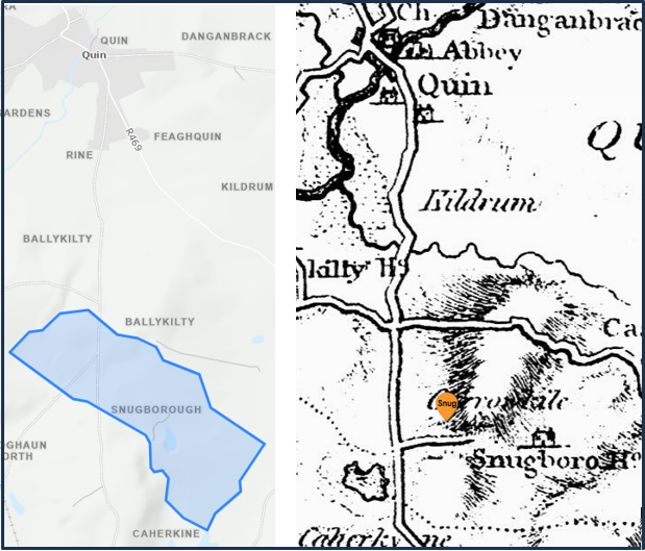
While only a kilometre from the village of Quin, bordering Ballykilty and Knopoge, it is part of the parish of Tomfinlough in Newmarket-on-Fergus.
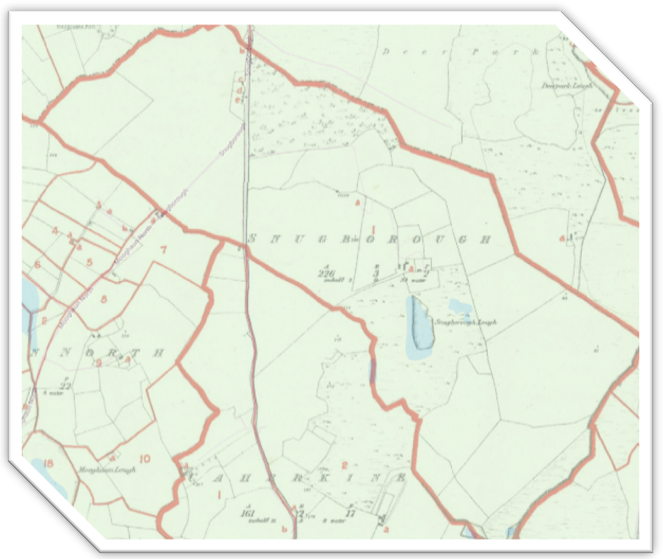
0.9 km²/0.35 square miles/225 acres
1641 Owner: John McNamara
1659 Census (3 Eng; 11 Irish)
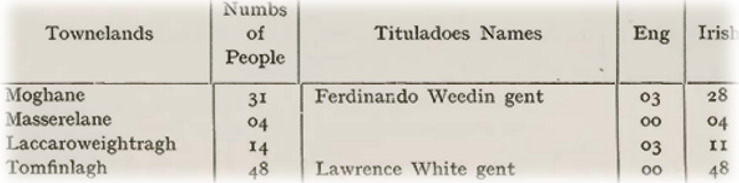
1670 Owner: Viscount Daniel O’Brien
Profitable land: 73 plantation acres; Unprofitable land: 7 plantation acres; Forfeited: 73 plantation acres.
1855 Griffiths Valuation
Tenants: James Healy, Simon Hayes, Martin Burns, Mary Kiely, Patrick Brennan.
Landlord: William Westby.
Census Information
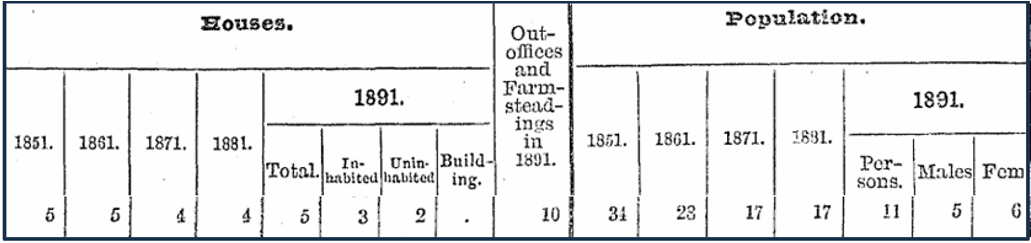
1841 Census record: 5 households, 34 persons (20M/14FM)
1851 Census record: 5 households, 34 persons (16M/18FM)
1861 Census record: 5 households, 23 persons
1871 Census record: 4 households, 17 persons
1881 Census record: 4 households, 17 persons
1891 Census record: 3 households, 11 persons (5M/6FM)
1901 Census record: 3 households, 9 persons
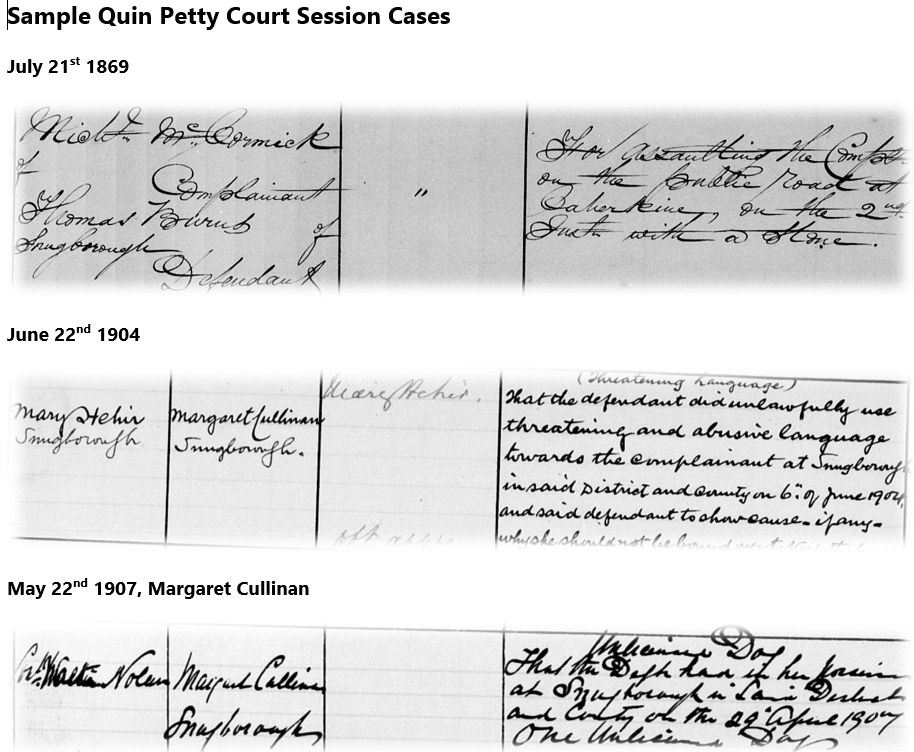
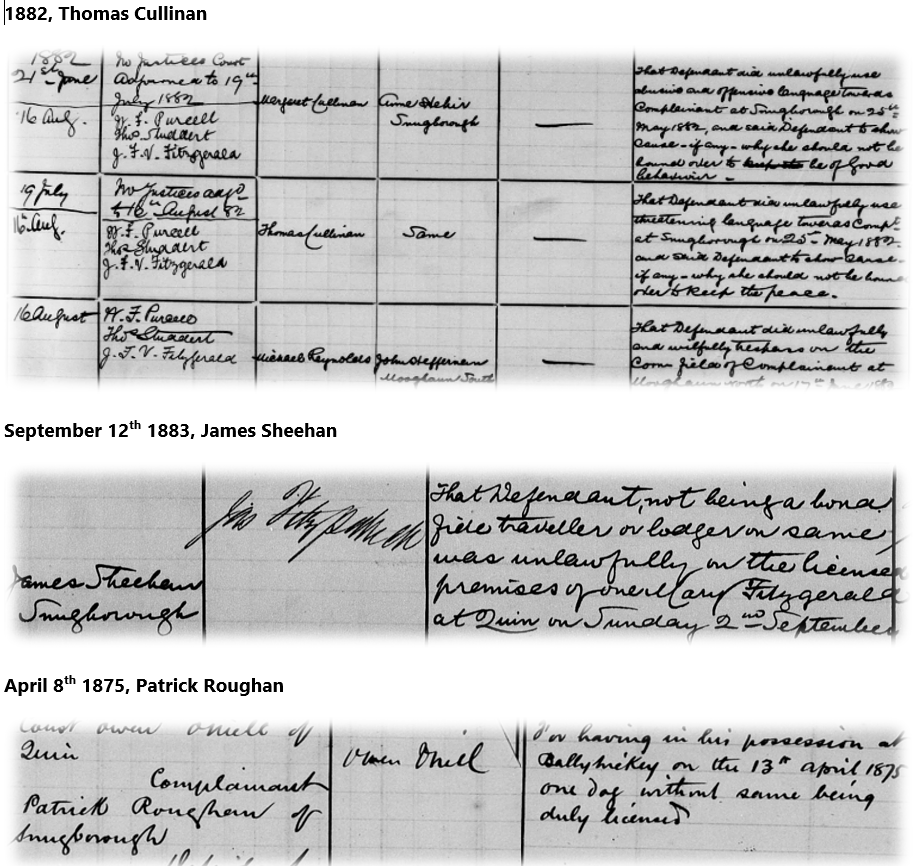
- Thomas & Margaret Cullinan, son William, daughter Margaret.
- Martin & Delia Liddy, daughter Mary, servant Mary Bridgeman.
- John Hehir.
1911 Census record: 4 households, 26 persons
- William & Bridget Cullinan, daughter Bridget, sons Thomas, Christopher, William.
- Martin & Delia Liddy, daughters Mary, Delia, sons Martin, Patrick, Thomas, Joseph, servants Patrick Keane, Thomas Hastings, Margaret Ryan, Lizzie Ryan.
- John & Kate McMahon, daughters Alice, Kate, sister-in-law Norah Browne, boarder Mary Hehir.
- James & Annie Burke.
1926 Census record: 3 households, 22 persons
- William & Bridget Cullinan, daughters Delia, Margaret Mary, sons Thomas, Christopher, William, John Joe.
- Martin & Delia Liddy, daughters Mary, Delia, sons Martin, Patrick, Thomas, workmen Patrick O’Connell, James Burke.
- Thomas & Mary Doherty, son Patrick, daughters Margaret, Bridget.
Closing comments
Snugborough appears as a townland designation in multiple counties, adopted as part of Anglo-Irish renaming practices during the plantation and post-plantation eras:
- Dublin: Castleknock and Coolock.
- Cavan: Formed from older Irish denominations (Coill Óg and Cnocán) before being renamed Snugborough in 1724 by Colonel Alexander Montgomery.
- Mayo: Located near Castlebar, historical local toponym recorded as Dromainn na gCloch.
- Wicklow: Multiple locations, including Kilbride and Donaghmore.
- Other Counties: Also present in parts of Waterford, Longford, Offaly, and Donegal.
Placenames are an important tool for reading a landscape and often are a historic record of a place. Townland names in particular tell a story that is often otherwise hidden from us. It can be a way to look into the very soul of a place. It is a shame therefore, when these have been obliterated and replaced by meaningless names that only reflect the desired grandeur of gentry. In Quin, we have such examples with the introduction of ‘boro’ and ‘ville’ to our townlands. Elsewhere, there seems to have been a reliance on the use of ‘dale/vale’ and ‘brook’ as a form of grandiosity, particularly in the naming of housing estates.
While it may not be desirable or feasible to re-introduce original names, surely they can be ‘re-cycled’ and used again when seeking names for places. Rather than creating new names for housing estates, why not delve into the archives for what is already available.
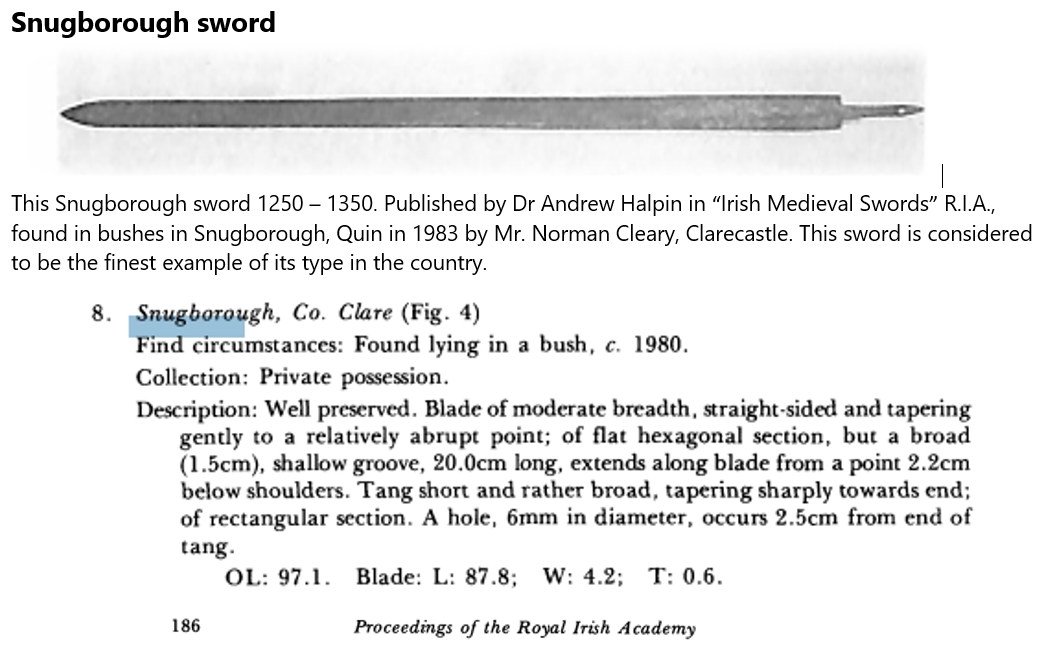
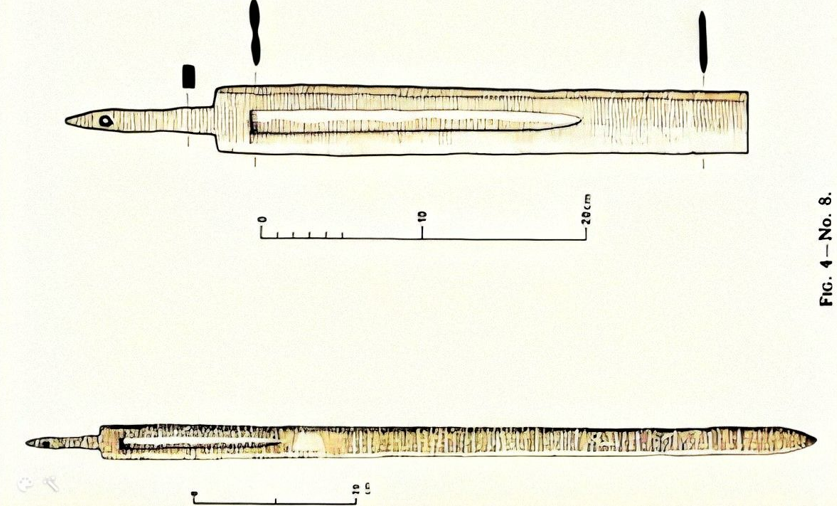
The Snugborough Sword is a mystery in terms of its discovery and present location. We hope to follow this up and provide readers with more background shortly.