Contender 2 – Tlachtga, Meath
The original Tlachtga was a druidess of considerable power and importance, the daughter of Mug Ruith who lived on Valentia Island in Kerry. He is said to have lived through the reign of nineteen kings, with his lifespan stretching back to the time of Christ on earth. Tlachtga and her father could travel the world on the Rath, a fabulous spinning wheel of fire that easily transported them. Mug Ruith sought out knowledge and learning like few before him and it was in this manner that he and Tlachtga travelled to study under Simon Magus (Simon the Sorcerer), who is mentioned in the Bible.
Simon Magus and Mug Ruith sent Tlachtga out into the world to gather as much knowledge as she could find. Upon her return they realized that her knowledge far surpassed their own!
They were outraged and such was their jealousy that they set the three sons of Simon Magus upon Tlachtga, who defiled her. She returned to Ireland where she gave birth to three sons, Dorb (Doirb), Cuma (Cumma) and Muach.
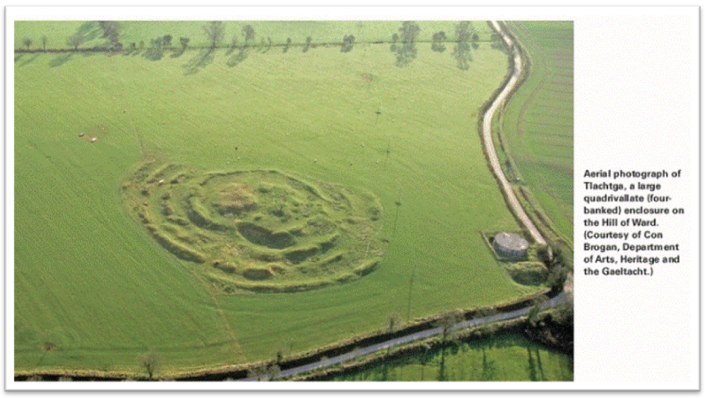
It was on the hill of Ward in county Meath that Tlachtga brought her three sons into the world, and it was there that she died, unable to sustain her life in the face of the utter grief and despair she felt at the indignity she had endured.
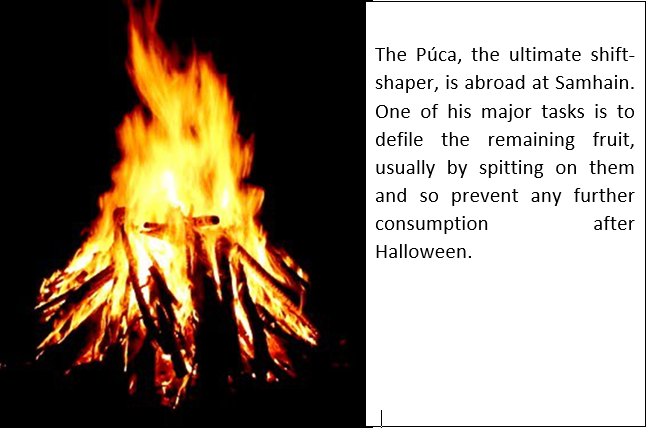
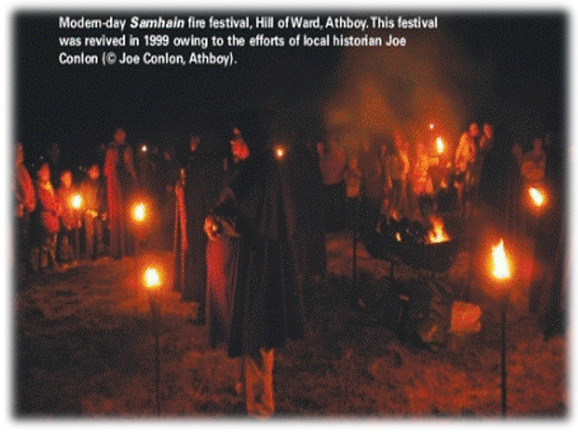
In recent years a renewal of the annual gathering on the hill of Ward now attracts hundreds of people at Halloween. A walk from Athboy up towards the Hill itself culminates with a celebration, with elaborate ceremonies and an acknowledgement of the cultural gift to Ireland and the world that Tlachtga represents.