Morals, manners, and customs of the Clare people

Hely Dutton was commissioned to compile a Statistical Survey of the County of Clare by the ‘Dublin Society’ (later permitted to add Royal to their name) in 1808. He appears not to have been the most tolerant of other peoples way of living and he certainly didn’t hide this in his report from Clare:

“To shew that a deplorable laxity of morals prevails, I need only refer my readers to the section on roads; they will there see a specimen of those of the higher ranks; and for a sample of those in the middling and lower ranks I must send them to Ennis on a Sunday morning; there they will see shops open, goods hanging at the doors for sale, standings in the streets, timber for sale leaning against the sessions-house, in short every appearance of business as there was on the previous market day; and many neighbouring ladies defer their shopping until that day, after paying their devotions to heaven, totally regardless of the fourth commandment. Had I not frequently seen magistrates sharing in this monstrous abuse of the sabbath, I could not have thought there was one in the town; it surely would be a meritorious act of the Lord Chancellor to supersede the abetters of such gross impiety.

The children, even infants, in this town are particularly wicked, and the ears (not of the clergy, magistrates, or church-wardens) are constantly grated by the most shocking and novel cursing and swearing.

A curious custom prevails in a part of this county; when a beast is slaughtered, the smith claims, and in some instances receives the head of the beast; formerly it was more general, but some have sense enough to refuse such a sacrifice to Vulca; probably the custom originated in a renumeration for the use of his sledge and his sinewy arm in knocking down the beast; however it may have been introduced, it is or was practiced lately in the Western isles, for Dr. Johnson in his Tour, page 183, informs us, that the smith has the head, the piper the udder, (how appropriate!) the weaver and others so many pieces, that a small share falls to the laird.

In many places gentlemen are called by the country people by their Christian names, without any of those additions, which modern pride expects from inferiors; on the road to Skarriff, I enquired from a poor woman, who lived in a gentleman’s house within view; she said, “Charley;” pray who is Charley? “Arrah don’t you know Charley? Why you must be a stranger in the country, or you’d know Charley O’Callaghan,” meaning Mr O’Callaghan of St. Catherine’s.

I saw hounds hunting near Spansel-hill on the 19th of August, and all the corn standing!

In no part of Ireland is hospitality more practised than in this county. I should be most ungrateful indeed, if I did not feel and acknowledge it; I wish I could say so much for my mare; for, whilst I have had every attention paid to my comfort in the parlour, she poor creature had often after a long journey been obliged to go to bed without her supper of oats: I am totally at a loss to account for this, which is by no means peculiar to this county; it may be found in Galway and elsewhere. You will be the more welcome the more wine you drink, yet six-pence worth of oats will be denied to your horse. I would advise no person to travel without a servant, and a sharp fellow too. If your horse is turned to grass at night, in all probability he will be sent to the deer-park, the calf-park, or stone-paddock, places proverbially bare; not one house in ten has either oats or straw in summer, and frequently but little hay.

A strange custom prevails in this county, and indeed in most parts of Ireland, (a remnant of feudal times;) if a poor man has business to transact with a gentleman, instead of coming up to the door, and sending in a servant with his message, he loiters about the door, and the stables, or frequently waits to catch his honor on the road from his house; thus losing his time at perhaps a very busy season. Frequently poor people, and sometimes wealthy ones, that come to pay their rent, are treated in this manner. I have often thought, that gentlemen seemed to take a pride in seeing and shewing so many dependents about their doors; if not, why not dispatch them immediately?

The men are now scarcely ever barefooted, except they are working in bogs, or other wet places, and the women not so much as formerly; they usually walk to market barefooted, but, when they come near the town, always wash there feet, put on their shoes and stockings, and adjust their dress like their superiors.

Very great use is made of mules and asses, for carrying baskets, and small loads, such as poor people usually load them with: for such persons, as are not able to keep a horse, they are a great convenience. It is astonishing, what a load some of these little animals (asses) will carry, frequently above 24 stone, much more than their own weight; and often a large stone is added up to the load, to balance one of the baskets: these kinds of loads are called up-loads. Though these kinds of loads are useful to poor people, it is ridiculous to see them so much used by those, who could very well afford to buy a cart, which with a moderate sized horse would very easily draw 128 stone, or 16 cwt.: but the cart must be got from Dublin; from the Implement manufactory on the Northwall; for a cart made in the country, not being constructed on any principle, would not carry half the weigh with the same ease to the horse.

It is very much the custom to make sacks for corn of a most unwieldy length, and frequently to load their small horses so heavily as to injure and sometimes break their backs; they have the further inconvenience of being difficult to move; none but the strongest men their to attempt it, and even these are often injured in their backs; but all – powerful custom reconciles them to it, and the example of their betters confirms it.

The Irish peasantry have often been accused, by their polite and travelled neighbours, and by absentees, of almost every nice incident to human nature. If this even was the case, could it be wondered at for a moment, if the extreme ignorance, in which they are reared, were considered? The poor people themselves are so sensible of this, that every man, that can possibly spare the money, gives his children such education, bad as it is, as he can procure for such a trifle as is usually paid at country schools. Can it be surprising, after reading the list of Irish classics, which I have before detailed, that they should believe in fairies, hobgoblins, witches, Will o’ the wisp, ghosts, and a multitude of legendary tales, which old women are fond of relating? It is rather astonishing they are so free from vice.

Many pagan rites still remain; and the poor ignorant native little thinks, when he is dancing round his bonfire, or dressing his May-bush, that he is using the same ceremonies the worshippers of Baal did.

In this county, as elsewhere, it is much the custom to put children to nurse with some healthy cottager; fine ladies don’t like either the trouble, or to spoil their shapes as this unnatural custom does not take place so much in England, it may help to account for the superior prolificacy of our Irish ladies. A great inconvenience attends this custom; the nurse and indeed her whole family think you are obliged to assist them, whilst they live; in fact there is no shaking them off: they in general endeavour to avoid taking any money as payment for nursing, but they contrive by collops, (grazing cattle,) wool, corn, potatoes, &c. &c. to get thrice more than a liberal allowance in money would amount to; and indeed many of the better kind of people would rather pay three times the amount in this unsatisfactory way, than in cash. It must at the same time be admitted, that the poor man’s family generally retain a great affection for the child during life.

 Wakes, quite different from what are so called in England, still continue to be the disgrace of the country. As it would be thought a great mark of disrespect not to attend at the house where the corpse lies, every person makes it a point, especially women, to shew themselves; and when they first enter the house, they set up the most hideous but dry-eyed yell, called the Irish cry; this, however, lasts but a short time. The night is usually spent in singing, not mournful dirges, but merry songs, and in amusing themselves with different small plays, dancing, drinking, and often fighting, &c.

Hurling matches or goals I have mentioned before. Chairs are meetings at night in some whiskey-house, where they dance, drink, fight, and frequently settle the politics of the county, &c. These two last kinds of meetings are ruinous to the young people of both sexes: it is nothing uncommon for servants of both sexes to stay out all night; the general custom of leaving outside doors open at night gives great facility to this breach of trust. It is by no means unusual for the gentleman of the house to lock himself up carefully in his bedchamber, and leave the key in both street and back-door; frequently there is no lock to either. Surely they cannot blame young people for taking advantage of so very reprehensible a neglect; in many cases, that indolence, which pervades the whole county, is the cause of it.

 It is the custom of the women of this county, in common with I believe every other in Ireland, to walk at some distance behind their husbands. Paddy, let him be ever so fond of his rib, would think it a mark of disrespect, if she walked by his side.”
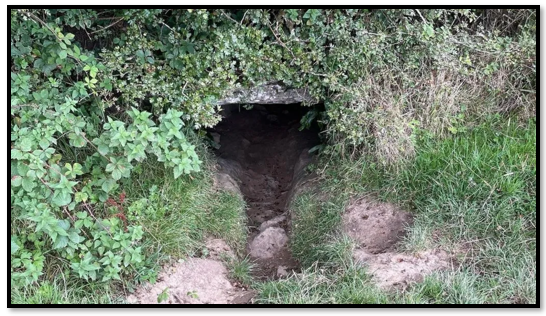
This once highly populated townland has been called by various spellings of its English name since first recorded in the inquisitions in 1586. Sometimes it was found with East or West added. Its current official Irish translation derives from Cé, meaning quay, which belies explanation given the situation of the townland. The inquisitions in 1641 recorded it as ‘Ceab’ while John O’Donovan, in 1839, suggested Ceabhach/Céabhach meaning ‘a land producing marshy grass’, both of which make a lot more sense!

Today, we could count the number of families living here on two hands. The figures given for baptisms and past census give a totally different picture of what it harboured in the past when up to 26 families lived here.

88.6 hectares / 0.88km²/0.34 square miles/219 acres

This townland is situated both sides  of the road to Ennis having left the village.

Inchiquin Papers – extracts referencing Keevagh

13-14 June 1699. Lease and release by John Durey to Sir Donough O’Brien, 1st Bart. of 24 acres in Keevagh, parish of Quin, barony of Bunratty in consideration of £40.

In 1703 Sir Donough purchased from the Commissioners for Sale of Forfeited Estates the lands of Keevagh, Daganbrack, Creevagh, Cahercalla, Maddara and Kildrum, totaling 440 acres, formerly held by Nicholas Arthur, who was attained for treason on account of his adherence to James II.

Land transfers in Keevagh in 1641

Freeholders in 1821

Keevagh: Laurence Corbett, James Corbett, Patrick Cody, James Halloran.

Keevagh West: H. Rev. Fitzgerald (resident in Dublin).

The above List of Freeholders contains the names of landholders who were registered to vote in Keevagh in 1821. A freeholder was a man who owned his land outright (in fee) or who held it by lease which could be for one or more lives (for example, his own life or for the lives of other people named in the lease). A significant percentage of the population was included in freeholders’ lists in the time period covered by this list (1796-1820), when both Catholic and Protestant 40 shilling freeholders were qualified to vote. A 40 shilling freeholder held a freehold worth at least 40 shillings per annum above the rent, enabling the inclusion of substantial farmers in the voters’ list. In 1829 the franchise level was increased to 10 pounds (there were 20 shillings in a pound), thus barring the 40 shilling freeholders whom Daniel O’Connell had mobilized and consequently confining the vote to landlords.


Occupiers of land in Keevagh on 1st May 1825 – eligible for tithe payments

Keevagh East: John Massey, John Doolaghty, Widow McNamara, Tim McGrath, James McGrath, John Moylan.

Keevagh West: James Boland, Patt Hallaran, Michael Downes, Cody Denis, Lawrence Corbett.

 Census Records for Keevagh

1841 Census: Population 140; Households 26

1851 Census: Population 31; Households 4

1861 Census: Population 42; Households 6

1871 Census: Population 29; Households 7

1881 Census: Population 17; Households 4

1891 Census: Population 11; Households 3


1901 Census: Population 7; Households 2

John & Mary Burke, nephew Patrick Gallagher.

Patrick Hogan, niece Delia Hogan, grand nephews Patrick & Michael Hogan.

1911 Census: Population 7; Households 2

Thomas & Catherine Moylan, servants Mary O’Callahan, Matthew Moloney.

Bridget Hogan, sons Patrick & Michael Hogan.

1926 Census: Population 13; Households 2

Thomas Moylan Head Married English Only
Catherine Moylan Wife Married English Only
Mary A Moylan Daughter   English and Irish
Cecelia Moylan Daughter   English and Irish
Patricia Moylan Daughter   English and Irish
Kathleen Moylan Daughter   English and Irish
Francis Moylan Daughter   English Only
Anne Gregan Sister in Law Single English Only
Matilda Custy Servant Single English Only
John Burke Servant Single English Only
Bridget Hogan Head Widow English Only
Pat Hogan Son Single English Only
Michael Hogan Son Single English Only

Some Baptisms in Keevagh in 1800’s

Date Child’s Forename Father’s Surname Father Mother Sponsors
15.12.1844 Thomas (?) Michael McGrath Mary John Curtin, Margaret McGrath
05.04.1832 Margaret Boland James Flanagan Briget Briget Quigly
??.06.1837 Bridget Boland James Flanagan B. Michael and Briget Cody
31.01.1840 Mary Boland James Flanagan Bridget Bridget Boland
06.04.1843 Pat Boland James Flanagan Bidy Pat Boland, Bidy Boland
25.01.1827 Briget Boland Pat Flanagan Mary Denis Carly(?), Margaret Carley(?)
10.05.1829 Michael Boland Pat Flanagan Mary Briget Boland, Michael Kitchin
27.10.1831 Pat Boland Pat Flanagan Mary Nancy McNamara, Thomas Halloran
19.10.1843 Kity Boland Pat Flanagan Mary Pat Halloran, Bidy Flanagan
??.08.1838 James Boland Pat Flanagan Mary Michael Downs, Mrs. Boland, Janes
??.05.1836 Margaret Boland Pat Flannagan Mary Dennis and Briget Cody
18.04.1828 John Boland Patrick Flanagan Mary Denis Cody, Briget Corley
15.10.1844 Mary Boland Patt Flanigan Mary Bridget Cody
05.03.1847 Mary Boland Patt Flanigan Mary Mary Donohoe
07.09.1825 Catherine Brick John Halleran Mary James Boland
03.02.1822 Bridget Brick John Halloran Mary Patrick Cody, Sally Halloran
26.09.1816 Michael Brick John Halloran Mary John Halloran, Honora Boland
29.08.1817 Michael Brick John Halloran Mary John MacNamara
22.04.1828 John Brick(?) John Halloran Mary Anne Halloran
05.08.1830 James Bricke John Halloran Mary Michael McNamara, Hanagh Lawler
14.01.1844 Patt Coady John Donoughue Mary Patt Corbett, Sarah MacNamara
21.09.1842 Michael Coady(?) Denis Lawler Judy Pat Corbett, Bidy Corbett
11.04.1845 Susan Cody Dennis Lawler Hannah John Hennesy, Mary Clune
03.10.1848 John Cody Dennis Lawler Susan Margaret Cody
08.05.1842 Nancy Cody John Donohoe Mary Denis Coady, Bidy Coady
27.05.1846 John Cody John Donohoe Mary Lawrence Downes, Kate Downs
23.06.1850 Mary Cody John Donohoe Mary Patt Corbett, Margaret Cody
29.11.1816 (?) Cody Patrick Fraly Pat Boland, Betty Cody
23.06.1850 Mary Coffee James McGrath Mary Margaret McGrath
16.02.1855 Mary Coffey Michael McGrath Mary John McGrath, Mary Moylan
26.08.1830 Michael Coleman John Haneen Margaret Pat Halloran, Sally Halloran
04.10.1843 John Collins John Reddin Bridget Michael McGrath, Mary Doloughty
29.05.1844 Michael Corbet Pat Coady Margaret Thomas Corbet, Bridget Corbet
12.08.1817 Margaret Corbett James Halloran Honora Anne Corbett
28.11.1844 Bridget Corbett John Doloughty Mary Patt and Bridget Corbett
31.01.1849 Mary Corbett John Doloughty Mary Patt and Norry Corbett
15.03.1821 Nancy Corbett John Horan Margaret Patt Corbett, mary Corbett
21.02.1830 Margaret Corbett John Moran Margaret James Corbett, Briget Moylan
22.03.1817 Pat Corbett John Margaret James McNamara
??.06.1840 John Corbett Matt Harkins Mary Patt Doloughty, Anne Corbett
03.02.1848 Mary Corbett Matt Harkins Mary Patt Halloran, Bridget Corbett
24.01.1830 Pat Corbett Pat Cody Margaret Lawrence Corbett, Briget Corbett
26.12.1831 Briget Corbett Pat Cody Margaret Denis Cody, Briget Cody
??.01.1838 Laurence Corbett Patt Cody Margaret Laurence and Anne Corbett
25.10.1843 Norry Corbett Tom Shea Nanny Pat Corbett, Bidy Corbett
27.02.1853 Mary Corbett Tom Shea Anne Laurence and Margaret Corbett
05.06.1828 Briget Corry James Hehir Mary Thomas Moylan, Nancy Corry
05.06.1828 John Corry John Corry Betty Michael Henissy, Catherine Moylan
23.01.1837 Bridget Cremins Daniel McNamara Hannah Pat Hogan, Ellen McNamara
30.08.1823 John Doolaghty Tim Rochford Brigid Laurence Corbett
22.05.1823 Thomas Downes M Kitchen Catherine
22.05.1823 Mary Downes M Kitchen Catherine
06.07.1825 Anna(?) Downes Michael Chichin Catherine Pat Cody
08.04.1821 Ellen Downes Michael Kidson Catherine Patt Cody, Mary Frawley
08.10.1826 Martin Downs Michael Kitchin Catherine Pat Carley, Ellen Lawler
21.01.1830 Lawrence Downs Michael Kitchin Catherine Patrick Corbett, Catherine Lawler
04.01.1825 Patrick Fraley Patrick Patrick Henessy
06.09.1819 Judy Griffy James Cummin Johanna John Corbett
26.01.1835 Tim Halloran Pat Grady Bridget Pat Halloran, Bridget McDonnell
16.02.1836 Pat Halloran Pat Grady Bridget Michael McNamara, Nancy Halloran
01.05.1842 Bridget Halloran Patrick Grady Bridget Patrick Cody, Bridget Halloran
14.03.1846 Pegy Halloran Patrick Grady alias Birley(?) Nancy Michael Halloran, Margaret Grady
01.12.1838 Thomas Halloran Patt Grady Bridget Michael and Margaret Grady
10.03.1848 Thady Halloran Patt Grady Bridget Dennis Cody, Bridget McDonnel
??.07.1837 Mary Halloran Thomas Corbet Ann Pat Doloughty, Margaret Fraley
28.06.1835 Bridget Halloran Thomas Corbett Anne Michael Doolaghty
07.04.1839 Mary Halloran Thomas Corbett Ann James and Catherine Halloran
18.02.1841 Anne Halloran Thomas Corbett Anne James Lynch, Mary McNamara
06.01.1843 John Halloran Thomas Corbett Nancy Michael Corbett, Bidy Corbett
??.04.1839 Margaret Healy(Mealy?) Pat Cody Margaret Dennis Cody, Sally Russell
23.11.1845 Thomas Henry Luke Molony Mary Patt Hickey, Bridget Gorman
08.02.1829 Mary Hogan John Crow Sally Kitty(?) Gerin, David Moylan
08.03.1816 Pat Hogan Thomas Moylan Honor Hogan
18.01.1832 Nancy Kinavane Thomas Gerin Briget Nancy Corry, John Hogan
29.06.1845 John Lachford John Glynn Margaret Tom Heihir, Bridget Glynn
19.07.1816 Margaret Lyddy Patrick Halloran Mary Patrick Fahy, Cate MaGrath
12.05.1842 Mary Mac Michael Clune Mary James Mac, Mary MacNamara
11.03.1817 Pat MacNamara James Woulfe Mary James MacNamara
25.04.1833 Anne McGrath James (?)man Mary Margaret McGrath
07.12.1834 Thomas McGrath James Cremmins Mary John Hogan, Margaret McGrath
06.08.1829 Margaret McGrath James Crimens(?) Mary Honor McInerny, (?)
20.04.1818 Mary McGrath James Crimmin Mary Catherine Corry
04.10.1820 Martin McGrath James Crimmin Mary Martin MaGrath
29.04.1832 Catherine McGrath James Crimmin Mary Nancy Corbett, David Moylan
20.08.1826 Michael McGrath James Crimmin(?) Mary Catherine Moylan
??.04.1837 Patt McGrath James Crimmins Mary Anne Corbett
01.06.1817 Brigid McGrath James Crummin Mary Catherine McGrath
01.05.1838 John McGrath James Mary Thomas Moylan, Anne Corry
09.04.1824 McGrath(?) MaGrath Cate
19.12.1821 Thomas McInerny John McGrath Margaret David Moylan, Catherine McGrath
12.04.1841 John McMahon Michael Giddam Peggy Michael and Mary Cumins(Crimins?)
03.09.1845 Daniel McNamara Bat Gannesy(?) Susan Susan Lawler
19.12.1821 Thomas McNamara John Meere Nancy Patt Meere, Nancy McNamara
26.10.1823 Ellen McNamara John Quillinan Bridget James McNamara
11.09.1828 Margaret McNamara Mathew Glen Margaret Ellen Coleman, Edmund Hogan
06.03.1822 Mary McNamara Mathew Glin Margaret John McNamara, Mary Moylan
07.01.1840 Thady McNamara Michael Cluin Mary Patt Clune, Mary Doloughty
15.03.1845 Patt McNamara Michael Clune Mary Catherine McNamara
27.08.1848 Michael McNamara Michael Clune Mary Tom O’Brien, Mary Cain
29.05.1836 Anne McNamara Thomas Clanchy Ellen Pat Doolaghty, Bridget Corbett
01.09.1839 Mary McNamara Thomas Clancy Ellen James and Mary McNamara
03.03.1834 Patrick McNamara Tom Clancy Ellen Thady McNamara, Mary McNamara
31.01.1835 James McNamara Tom Clancy Ellen Pat and Anne Halloran
14.12.1839 Catherine Moylan David Moylan Anne Bridget Hogan
23.03.1837 Honora Moylan David Reddan Anne Margaret Moylan
??.12.1837 Briget O’Gorman Daniel Neylon Mary Judith Frawley
26.04.1854 Michael Slattery Michael Moylan Maria William Moylan, Margaret Slattery
07.10.1839 Mary Walsh John Freeman Bridget Michael and Mary Hehir
02.05.1857 Margaret Coffee Michael McGrath Mary Bridget Crimmins
21.04.1861 John Coffee Michael McGrath Mary Patt McGrath, Mary McGrath
??.02.1825 Mary Coffy Michael McGrath Mary John McGrath, Sally Moylan
06.03.1878 Margaret Connely Michael Faul Mary Bridget Moylan
15.08.1858 Thomas Corbett Thomas Shea Anne Laurence Corbett, Margaret Corbett
09.03.1862 Hugh Hogan Hugh Daffy Bridget Patt Hogan, Ellen Finucane
27.12.1859 Margaret Hogan Thomas Haneen Mary Edmund Burke, Margaret Haneen
22.04.1855 Thomas Rochford John Clancy Margaret Margaret Ma(?)
31.01.1872 Bridget Russell Pat Coffey Anne Michael Clune, Bridget Russell
01.05.1873 Mary Russell Patt Coffee Anne Mary Russell
15.08.1856 Thomas Slattery Michael Moylan Mary Daniel Hayes, Bridget Slattery
22.09.1861 Johanna Slattery Michael Moylan Mary Thomas Dolertny, Margaret Taylor
20.07.1864 John Slattery Michael Moylan Mary Thomas Crowe, Margaret Slattery