Introduction

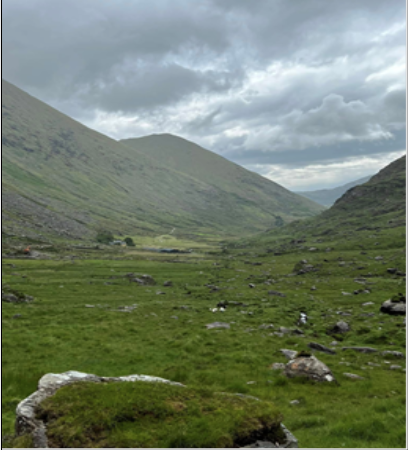
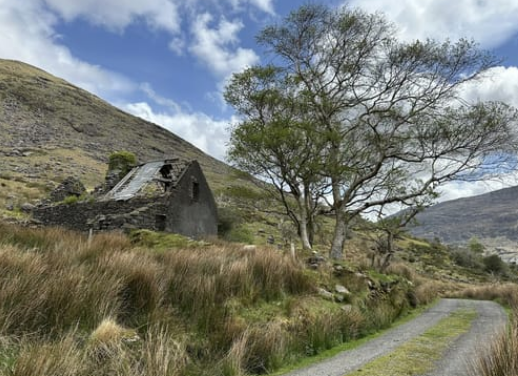
Bridia Valley is one of several mountain glens hidden in the quiet corners of the McGillicuddy Reeks, South Kerry. The people here are hill farmers, mostly raising blackface sheep. Revenue fell when prices for sheep wool collapsed some years ago. The valley is served by two small shops and a pub, some miles away. Over the years the local population has seriously diminished. Most of the young folk are getting a secondary education in nearby Killorglin. Afterwards they are moving on to further education and then working elsewhere. They are not returning to the hills.

English is the spoken language in Bridia but with a huge contribution from remaining Irish language remnants. The area remains culturally rich, with traditions, folklore and language remaining. Unfortunately, no anthropologist, historian or folklorist has ever gathered material here.

The seanfhocail presented here were collected by a local doctor, who attended to some of the inhabitants of Bridia valley. You may recognise some sayings; others are older and possibly unique to the area.

MH. 04/04/2026.


The seanfhocail of John Clifford, which came originally from Bridia Valley in Glencar County Kerry,

John Clifford (1911-2004) gave me these seanfhocail in the later years of his life. He received them in his youth from his grandmother Peggy O’Sullivan, whose people came from Bridia valley in Glencar. He used to say that the first seanfhocail “Is mairg a bhíonn shíos i gcéad lá, tagann gach mhaith le cháirde” was the most important one. The old people of Bridia recited this seanfhocail when they heard news of a tragedy. The depth of wisdom of these people is evident in that no matter what the calamity, they realized that ‘every good comes in time’. The seanfhocail are written exactly as John gave them to me.

Pat Gallagher, Killorglin, July 2013.
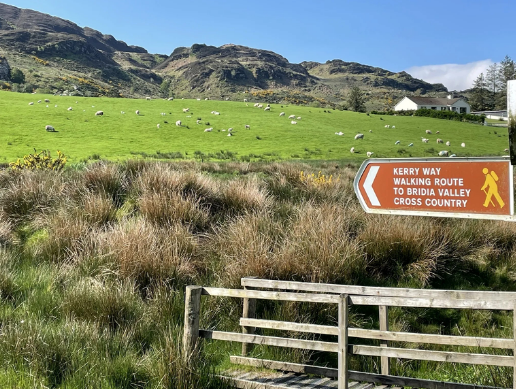
Seanfhocail na mBraighde – Bridia Valley, Glencar.

-Is mairg a bhíonn shíos i gcéad lá, tagann gach mhaith le cháirde.

Alas for the person who falls the first day, (but) every good comes in time.

-Cé bhíonn téigeann as nua nach dteigeann as, ní theigeann fear na h-easrachán as. (pr. “high” rachán).

Whoever does or doesn’t come out of it, the interfering man won’t come out of it.

-Ni h-éirigheann a dá dtráigh leis na gobadán

The gobadán (sandpiper) can’t have both sides of the strand.

-Ní leigheas ar an gcathú acht é do smachtú le foighne.

There is no cure for fighting but to control it with patience.


-Is minic a chuir fear na cruadhtain fear na boútha amach (I gcondhaí)

It is often that the person who was hard up, put out the man of the ashes (of the house).

Casadh na daoine le cheile ach ní casadh na cnoic ná na sleibhte

People meet each other but not the hills and the mountains.

-Is mó í thar lear a thoir do thíar

(Too far) east is west.

-Ni mór duit an síolta ná h-arthrú ós, ní feidir leat na gaoithe a h-iompaighí (present iompaí).

When you cannot change the wind, you must change the sails.

Is mairg a bhíonn a naoín a naoithce (pr. nantha) tagainn an grían ina dhiaidh gach farrainge.

Alas for the person who is down, the sun always comes after the rain.
-Sé an t-ádha is mó a teacht gur tubaiste (pr. tubáiste), cumraoíocht le féine linn.

The greatest luck comes in the shape of misfortune to all of us.

 -Ní raibh dá eagla ar aoine riamh

There were never two fears in anyone at the same time.

 -An té a goidfeadh a phoinn grein sé ar an rud níos mó.

He who will steal a pin will steal a greater thing.

 –Tuigeann fear léann leath-fhocail

An educated man will understand half a word

 –Budhtair teisghanaigh is búatha- beathna

Life is what you make of it.

 –Is deise é a feasa, gur a bhé liomsa is fearr leat?

It’s nice to be wise, would you like to be me?

Mar a scúbhamíd go léir ós ár dhorais amach, beadh an sráid a granaithe (glanaithe?) again.

If we all swept before our own doors, we would have a clean street.

Bíodh an ciall go léir againn i ndiadh an t-aonach

We’re very wise the day after the fair.

Ní fear agut slídge do dtrúagha air, ná do shoic ar an gcúlainn.

It didn’t matter if you had the sock (blade of the plough) on your shoulder provided the ploughing was done.

An fear broistighéach do fúar sé báis agus do cuireadh é an fear leisgiúíl

The hurried man died and the lazy man buried him.

Eist (pr. est) le fúam na h-abhainn and geóbhair breach.

Listen to the sound of the river and you’ll get a trout.

An té a raghaid a barraithibh, bíon sé go bróinacht fé ndeire.

He who goes borrowing, goes sorrowing.

An rud nua nác fhios agut ní bhiodh an triobolóid agut sa féin (Pr. an rud, núná® fhios agut…)

What you don’t know won’t trouble you.

Is fearr agut a rugadh tú leis an t-ádh ná an saibhreas i bhfaid.

Better to be born lucky than rich.

Tógad an domhain go bhfuiriste agus tagainnse ann go moill (pr. mall).

Take the world easy and the world will take you easy.

Báis a laoghtha (pr. liatha) a deir aca Día (aca= in the name of).

The Lord is the safeguard in death.

Scéal a h-airig an scéal (arís), sceál fein scéal gach aoinne.

A story tells a story, a person’s story is everyone’s story (or everybody with their story).

Ná bhriseadh nuá ná deineadh an react lón.

Don’t break law and don’t make law.

Gor an bé a bhreith ar na gcómharsion leat, sé mar agut féin.

It by yourself you judge your neighbours.

Sé an leanbh dóite á im eagla a gcomhair na theine.

A burnt child fears the fire.

Is fearr agut a bheit cinnte na níos ar go bhróin.

It’s better to be sure than sorry.

Is bog agam bláthach nuair a bhíonn mo bholg lán de.

I have no meas in buttemilk when my stomach is full of it.

Moll an óige and tiocfaidh said.

Praise the youth and they will succeed.

Sé an díabhail a fhios agut níos fearr ar an peaca díabhail.

The devil you know is better than the devil you don’t.

Is feidir leat an capaill a thógaint go dtí an lacáin-bhrúach ach ní feidir leat a cuireich é ar deoch –ól.

You can bring a horse to water, but you can’t make him drink.

Ní cuireann ceann críonna ar gcúlainn óige.

You can’t put an old head on young shoulders.

Foil orm a deir an droich gnó.

The bad work will tell you come back again.

An éantha le cleithe céanna, a cruinniú le céile

Birds of a feather flock together.
What did the Anglo Normans ever do for us?

We are well aware of the impact of the Anglo-Norman invasion on our history, the undermining of Gaelic society and the replacement of our native structures. Poor old Diarmuid MacMurrough takes a lot of blame for all of this, despite the fact that Henry II in England had already sought and had been given approval by Pope Adrian to invade and civilise us. Henry was just waiting to finish his war in France before sorting us out!

Anyway, in they came, conquered, settled, married and eventually becoming more Irish than even ourselves, ‘níos gaelaí ná na Gaeil féin’! But besides building towns and castles, robbing our women (and probably taking our jobs!), what did the Anglo-Normans do for us – if anything?

Well, for one, they gave us a whole new suite of names, both forename and surname, to choose from.

The Norman influence on Irish surnames

Following the invasion of 1169, a large number of Anglo-French first and last names entered into Ireland. Many, such as Power, Browne, Fleming, Joyce, Burke, Barry, Costello, Nagle, Nugent, D’arcy, Roche and Walsh/Welsh/Wallace, are nowadays considered Irish and are commonly found in Clare. So, too, are those with the Fitz prefix such as Fitzmaurice, Fitzgerald, Fitzgibbon and Fitzpatrick which most people would regard as Irish as the shamrock. Fitz, meaning ‘son of’, can be considered the Norman version of Mac (it derives from the Latin/French ‘fils de’, meaning ‘son of’). Burke came from de Burgh, Roche from de Roiste, Power from de Paor.

In 1366, a law was passed that “Every Englishman do use the English language, and be named by an English name, leaving off entirely the manner of naming used by the Irish.” This was introduced to dissuade the settlers from adopting Celtic prefixes or forms of surname. It didn’t have much affect as many settler families added Mac or ‘O’ and Norman names evolved into an Irish form (eg McHenry, McArthur).

In 1465 a law was passed enacting “that every Irishman that dwells betwixt or amongst Englishmen in the County of Dublin, Myeth, Vriell, and Kildare … shall take to him an English Surname of one town, as Sutton, Chester, Trym, Skryne, Corke, Kinsale; or colour, as white, blacke, browne; or arte or science, as smith or carpenter; or office, as cooke, butler ….”

Many of the trades of the early medieval period such as Archer, Butler, Cooper, Carpenter, Draper, Skinner, Tanner found their way into our surnames. Other introductions from this period came from the mercenary soldiers who accompanied the Norman invasion: Walsh (meaning Welsh), Joyce and Fleming (from Flemish mercenaries) are examples.

Incidentally, the Normans usually took their surnames from the place of their family origins. So, D’arcy originates in Arcy in Normandy. De Clare originates in Clare in Suffolk where the Anglo-Norman family were based. While De indicated their place of origin, Le was used to describe them, eg Le Poer meant ‘a poor person’.

De Burgh – Burke – from a placename in Suffolk, France

Le Botilier – Butler – Occupation bottle steward

De Barra – Barry – from an estate in Wales

Le Waleys – Walsh – the Welshmen

De Angulo – Costello/Nangle – from Nangle Pembrokeshire

What of their influence on forenames?

 Many of the Normans forenames introduced here were of a biblical or European saintly origin.

 In 1922, Reverend Patrick Woulfe wrote extensively on the topic of Irish name origins as follows:

In the same manner Norman and English names became current in Irish families during the thirteenth and subsequent centuries. These have now almost completely supplanted the old Gaelic names. The names borne by the Normans and by them introduced into Ireland, were of three kinds :

 (1) names of Scandinavian origin which their ancestors had carried with them to Normandy ;

(2) names of Germanic origin which the Frankish conquerors had brought across the Rhine and which had ousted the old Celtic and Latin names from France ; and

(3) Biblical names and Latin and Greek names of saints,, which the Normans began to adopt about the beginning of the eleventh century.

Together with these came in a few Celtic names from Brittany, a small number of Anglo-Saxon names, some Danish and Norse names from England, and one or two British or Welsh names. These were nearly all very rare and most of them soon died out. Of the Anglo-Saxon names, only two, Edmund and Edward, survived. Alfred has been revived in recent times. At the period of the Invasion, Frankish names were by far the most popular among the Normans, but Biblical and saintly names were coming rapidly into favour.

The following is a list, in order of frequency, of the more common names borne by the early Anglo- Norman invaders, the Biblical and saintly names of Latin and Greek origin being printed in italics :

William, Robert, Richard, John, Walter, Roger, Ralph, Adam, Hugh, Henry, Thomas, Nicholas, Gilbert, Geoffrey, Elias, Peter (Piers), Osbert, Reginald, Jordan, Simon, Alan, Stephen, Philip, David, Arnold, Alexander, Laurence, Baldwin, Herbert, Martin, Maurice, Godfrey, Andrew, Alfred, James, Samson, Turstein, Warin, Ailward, Daniel, Edward, Gregory, Bernard, Benedict, Hamon, Matthias, Michael, Gerard, Gervase, Lambert, Wilkin, Patrick, Edmund, Edwin, Hubert, Ivor, Joseph, Oliver, Mark.

 The following in alphabetical order were rare :

 Abraham, Adelard, Ailmer, Antony, Augustine, Brian, Clement, Constantine, Estmund, Eustace, Everard, Gocelin, Isaac, Leonard, Luke, Matthew, Miles, Milo, Odo, Osbern, Osmund, Pagan, Ponce, Randulf, Redmund, Rodulf, Silvester, Turold, Ulf, Vincent.

 The following names only came in, or at least became popular, at a later period :

Bartholomew, Christopher, Francis, Gerald, George, Paul, Roland, Theobald.

 Women’s names among the Normans were nearly all of the Biblical or saintly class:

 Agnes, Alice, Amelina, Anastasia, Annabella, Catherine, Cecily, Christina, Dorothy, Egidia, Eleanor, Evelyn, Frances, Honora, Isabella, Johanna, Matilda, Margaret, Susanna.

 The name Mary does not seem to have come into use in Ireland before the end of the16th century. Brigid only began to be used about the same period.


Extracted from ‘Sloinnte Gaedheal is Gall’, Patrick Woulfe 1922

Out with the old, in with the new

The Anglo-Normans also brought with them new animal species such as the rabbit and fallow deer, new foods such as wheat, orchard fruits, mutton and farming practices such as hay-making. They introduced us to continental European religious saints and practices of the Roman Church. European religious orders soon followed such as the Franciscans, Augustinians, Cistercians, Dominicans etc. These replaced the structures of the native Irish Christian Church.

Up to then, the Irish natives did not adopt the name of saints as they considered this to be placing themselves on a par with the saint. Such naming convention was reserved for those of higher status in the monasteries. This was circumvented by use of the prefix Maol or Giolla meaning follower or servant. The Normans changed all of that and it was now acceptable to be called Peter, James, Michael, John, Mary, Brigid or Margaret.

Very few of us to this day do not have either a forename or surname that is not of Norman origin. Eventually, arising from the Gaelic Revival in the late 19th century, new Irish language versions of these forenames appeared such as Séan, Seamus, Peadar, Máire, Bríd, Mícheál, Cathal and many more appeared.

The Irish Church did not condemn the practice of slave-trading by the Irish until the invasion by the Anglo-Normans and the encroachment of the Roman Church. The story of Patrick (Patricius, son of a Roman administrator), which was introduced here after the Norman conquest, presents the native Irish as uncivilised pagan slavers who needed to be brought to heel. So the Normans inadvertently gave us our native saint and a forename for a good chunk of our population for generations following.

Out with the new, in with the old

Children are rarely given these European saint names today. Authentic Gaelic forenames are much more popular. We are nevertheless, unlikely to see the demise of the Anglo-Normans surnames that were introduced here. But all of us Mikes, Jimmies, Johnnys, Paddys, Kittys, Cathys, Maggies and Bridies can thank the Normans for what they brought us!