Quin School Feaghquin

The first recorded ‘National school’ in Quin was opened in the year 1856. The school, known locally as a “Reading House,” was situated where Malachy Hassett has his stables in Feaghquin. The home of the late Mrs. Muriel O’Neill was at that time the residence of the teacher. The last teacher to live there was Mrs. Lena Weldon – Helena Degidon of Rylane and her husband John Weldon, aka the writer Brinsley MacNamara. The first recorded enrolment in the “Male School” in the year 1863 was Michael Clune – Carhugar – farmer, aged 15. In 1871, there is a record of the first infant, William Considine-aged six, whose father is registered as a teacher. Situated in Feaghquin, the ‘Old School’ was built in 1896. The boys and girls schools were amalgamated on April 1st 1928. Up to that year they were separate schools.The last significant upgrade was in 1960 at Newline. It was occupied in 1964. The old school was used by the local Macra na Feirme as a garage and training workshop for skills such as welding and mechanics for many years afterwards.It waas converted to a private home in the 1990’s and continues to be in private ownership to this day.

Brinsley MacNamara
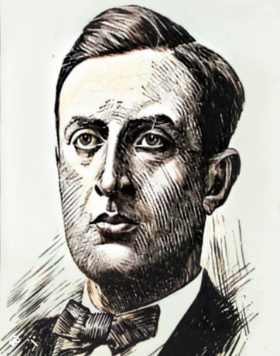
This was the pen-name of John Weldon a writer, playwright and registrar of the National Gallery of Ireland. He was the author of several novels, the best known was his first, The Valley of the Squinting Windows (1918). The book caused a furore in his native Westmeath on its publication, to the extent that Brinsley had to retreat from his home place of Delvin. He continued to write for many years after his controversial first work. Among his plays are ‘The Glorious Uncertainty’ (1923) and ‘Look at the Heffernans’ (1926). On the 23rd of June 1920 MacNamara married local Quin girl, Helena Degidon of Rylan, in Clooney Church. Helena was a school teacher. The couple lived in Feaghquin next door to the school.

Born John Weldon, McNamara grew up in the small town of Delvin, Co. Westmeath, where his father was the schoolmaster. His work of fiction, ‘The Valley of the Squinting Windows,’ was written in 1916 and lambasted the gossip and crushing conformism which he felt exemplified rural Ireland at that time. Garradrimna, the small town featured in the book, was a hotbed of gossip and scandal. Its description in the book, even down to its population and layout, seemed to resemble Delvin closely. As for the characters, the men were cruel drunks while the women were invariably judgmental and unpleasant. The schoolmaster was one of the few local people with redeeming features.

In 1918, the book finally made its way to Delvin where it was read publicly by groups of horrified townspeople. Many locals reportedly recognised themselves in the text and a group of men accosted James Weldon, the author’s father, roughing him up. He only escaped due to police intervention. They also sought out Brinsley McNamara, who was in the town but had been forewarned. He fled through the countryside, later stating that he believed he would have been killed had he been caught that night. The protestors had to make do with burning a copy of the book in a tar barrel in the town.The criticism extended beyond Delvin.The author was castigated for the negative portrayal of Ireland and the frank discussion of sexuality in the book. As one newspaper thundered: ‘It is a downright shocking book. The marrow of a cynicism, uncalled for, captious, sullen, vicious, currish and the meanly sordid is writ large upon its every page.The author does not seem to have caught the small beauty of Irish village life. Rather, beetle-like, he has chosen to immerse himself in the fetid sordid meanness and reeking moral filth.’

Back in Delvin, a boycott of the family began when the shops in the town refused any of the Weldons service. The school in which Brinsley McNamara’s father taught was also boycotted with pickets placed outside the building. Half of the students were withdrawn in a boycott that lasted seven years and only ended when the Weldon family was forced to move away.Brinsley McNamara himself went on to become a well-known actor in Dublin and the registrar of the National Gallery of Ireland. His publishers had withdrawn his book from circulation, however, and the controversy had a profound effect on his family and the town of Delvin. It is likely that neither he, nor the village of Delvin, never forgot the reaction to ‘The Valley of the Squinting Windows.’ It is likely, also, that other Irish authors of the era thought twice before writing a negative portrayal of their homeland after such a reaction.
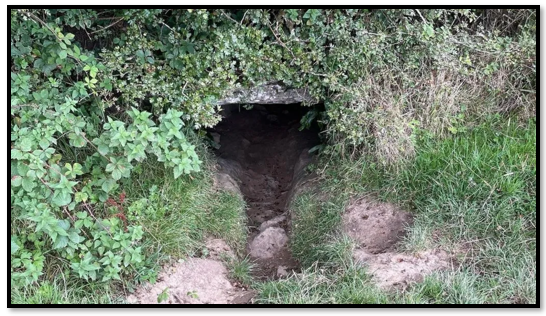
 

What did the Anglo Normans ever do for us?

We are well aware of the impact of the Anglo-Norman invasion on our history, the undermining of Gaelic society and the replacement of our native structures. Poor old Diarmuid MacMurrough takes a lot of blame for all of this, despite the fact that Henry II in England had already sought and had been given approval by Pope Adrian to invade and civilise us. Henry was just waiting to finish his war in France before sorting us out!

Anyway, in they came, conquered, settled, married and eventually becoming more Irish than even ourselves, ‘níos gaelaí ná na Gaeil féin’! But besides building towns and castles, robbing our women (and probably taking our jobs!), what did the Anglo-Normans do for us – if anything?

Well, for one, they gave us a whole new suite of names, both forename and surname, to choose from.

The Norman influence on Irish surnames

Following the invasion of 1169, a large number of Anglo-French first and last names entered into Ireland. Many, such as Power, Browne, Fleming, Joyce, Burke, Barry, Costello, Nagle, Nugent, D’arcy, Roche and Walsh/Welsh/Wallace, are nowadays considered Irish and are commonly found in Clare. So, too, are those with the Fitz prefix such as Fitzmaurice, Fitzgerald, Fitzgibbon and Fitzpatrick which most people would regard as Irish as the shamrock. Fitz, meaning ‘son of’, can be considered the Norman version of Mac (it derives from the Latin/French ‘fils de’, meaning ‘son of’). Burke came from de Burgh, Roche from de Roiste, Power from de Paor.

In 1366, a law was passed that “Every Englishman do use the English language, and be named by an English name, leaving off entirely the manner of naming used by the Irish.” This was introduced to dissuade the settlers from adopting Celtic prefixes or forms of surname. It didn’t have much affect as many settler families added Mac or ‘O’ and Norman names evolved into an Irish form (eg McHenry, McArthur).

In 1465 a law was passed enacting “that every Irishman that dwells betwixt or amongst Englishmen in the County of Dublin, Myeth, Vriell, and Kildare … shall take to him an English Surname of one town, as Sutton, Chester, Trym, Skryne, Corke, Kinsale; or colour, as white, blacke, browne; or arte or science, as smith or carpenter; or office, as cooke, butler ….”

Many of the trades of the early medieval period such as Archer, Butler, Cooper, Carpenter, Draper, Skinner, Tanner found their way into our surnames. Other introductions from this period came from the mercenary soldiers who accompanied the Norman invasion: Walsh (meaning Welsh), Joyce and Fleming (from Flemish mercenaries) are examples.

Incidentally, the Normans usually took their surnames from the place of their family origins. So, D’arcy originates in Arcy in Normandy. De Clare originates in Clare in Suffolk where the Anglo-Norman family were based. While De indicated their place of origin, Le was used to describe them, eg Le Poer meant ‘a poor person’.

De Burgh – Burke – from a placename in Suffolk, France

Le Botilier – Butler – Occupation bottle steward

De Barra – Barry – from an estate in Wales

Le Waleys – Walsh – the Welshmen

De Angulo – Costello/Nangle – from Nangle Pembrokeshire

What of their influence on forenames?

 Many of the Normans forenames introduced here were of a biblical or European saintly origin.

 In 1922, Reverend Patrick Woulfe wrote extensively on the topic of Irish name origins as follows:

In the same manner Norman and English names became current in Irish families during the thirteenth and subsequent centuries. These have now almost completely supplanted the old Gaelic names. The names borne by the Normans and by them introduced into Ireland, were of three kinds :

 (1) names of Scandinavian origin which their ancestors had carried with them to Normandy ;

(2) names of Germanic origin which the Frankish conquerors had brought across the Rhine and which had ousted the old Celtic and Latin names from France ; and

(3) Biblical names and Latin and Greek names of saints,, which the Normans began to adopt about the beginning of the eleventh century.

Together with these came in a few Celtic names from Brittany, a small number of Anglo-Saxon names, some Danish and Norse names from England, and one or two British or Welsh names. These were nearly all very rare and most of them soon died out. Of the Anglo-Saxon names, only two, Edmund and Edward, survived. Alfred has been revived in recent times. At the period of the Invasion, Frankish names were by far the most popular among the Normans, but Biblical and saintly names were coming rapidly into favour.

The following is a list, in order of frequency, of the more common names borne by the early Anglo- Norman invaders, the Biblical and saintly names of Latin and Greek origin being printed in italics :

William, Robert, Richard, John, Walter, Roger, Ralph, Adam, Hugh, Henry, Thomas, Nicholas, Gilbert, Geoffrey, Elias, Peter (Piers), Osbert, Reginald, Jordan, Simon, Alan, Stephen, Philip, David, Arnold, Alexander, Laurence, Baldwin, Herbert, Martin, Maurice, Godfrey, Andrew, Alfred, James, Samson, Turstein, Warin, Ailward, Daniel, Edward, Gregory, Bernard, Benedict, Hamon, Matthias, Michael, Gerard, Gervase, Lambert, Wilkin, Patrick, Edmund, Edwin, Hubert, Ivor, Joseph, Oliver, Mark.

 The following in alphabetical order were rare :

 Abraham, Adelard, Ailmer, Antony, Augustine, Brian, Clement, Constantine, Estmund, Eustace, Everard, Gocelin, Isaac, Leonard, Luke, Matthew, Miles, Milo, Odo, Osbern, Osmund, Pagan, Ponce, Randulf, Redmund, Rodulf, Silvester, Turold, Ulf, Vincent.

 The following names only came in, or at least became popular, at a later period :

Bartholomew, Christopher, Francis, Gerald, George, Paul, Roland, Theobald.

 Women’s names among the Normans were nearly all of the Biblical or saintly class:

 Agnes, Alice, Amelina, Anastasia, Annabella, Catherine, Cecily, Christina, Dorothy, Egidia, Eleanor, Evelyn, Frances, Honora, Isabella, Johanna, Matilda, Margaret, Susanna.

 The name Mary does not seem to have come into use in Ireland before the end of the16th century. Brigid only began to be used about the same period.


Extracted from ‘Sloinnte Gaedheal is Gall’, Patrick Woulfe 1922

Out with the old, in with the new

The Anglo-Normans also brought with them new animal species such as the rabbit and fallow deer, new foods such as wheat, orchard fruits, mutton and farming practices such as hay-making. They introduced us to continental European religious saints and practices of the Roman Church. European religious orders soon followed such as the Franciscans, Augustinians, Cistercians, Dominicans etc. These replaced the structures of the native Irish Christian Church.

Up to then, the Irish natives did not adopt the name of saints as they considered this to be placing themselves on a par with the saint. Such naming convention was reserved for those of higher status in the monasteries. This was circumvented by use of the prefix Maol or Giolla meaning follower or servant. The Normans changed all of that and it was now acceptable to be called Peter, James, Michael, John, Mary, Brigid or Margaret.

Very few of us to this day do not have either a forename or surname that is not of Norman origin. Eventually, arising from the Gaelic Revival in the late 19th century, new Irish language versions of these forenames appeared such as Séan, Seamus, Peadar, Máire, Bríd, Mícheál, Cathal and many more appeared.

The Irish Church did not condemn the practice of slave-trading by the Irish until the invasion by the Anglo-Normans and the encroachment of the Roman Church. The story of Patrick (Patricius, son of a Roman administrator), which was introduced here after the Norman conquest, presents the native Irish as uncivilised pagan slavers who needed to be brought to heel. So the Normans inadvertently gave us our native saint and a forename for a good chunk of our population for generations following.

Out with the new, in with the old

Children are rarely given these European saint names today. Authentic Gaelic forenames are much more popular. We are nevertheless, unlikely to see the demise of the Anglo-Normans surnames that were introduced here. But all of us Mikes, Jimmies, Johnnys, Paddys, Kittys, Cathys, Maggies and Bridies can thank the Normans for what they brought us!