This is one of four townlands named Carrowgar in the county and one of four townlands in Quin that begins with Carrow/An Ceathrú. The previous post exploring Carrowroe/Ceathrú Rua offered some explanation relating to this placename prefix. While Ceathrú, meaning ‘quarterland’, is sometimes inter-changeable with ‘townland’, this word can also mean pasture or green in the context of describing place. Gearr, meaning ‘short’ might make more sense when applied to the description of the land or field rather than the larger townland. James Frost, the renowned linguist from Ballymorris, Cratloe, also translates it as meaning ‘short quarterland’ (The origin & history of Irish Placenames, p.393), while elsewhere it has been interpreted as ‘a place near at hand’.
118.39 hectares / 1.1839 km²/0.46 square miles/292 acres


List of Freeholders [including landlords and tenants]: Carrowgare 1813
1855 Griffiths Valuation Carrowgar
Tenants:
1. Thomas Corbett
2/3/4. Patrick Clune
5. Michael Gleeson
6. James Clune
7. Anne Taylor.
Landlord: Charles G O’Callaghan.


Census Records
1841 Population 67, Households 10
1851 Population 77, Households 12
1861 Population 58, Households 10
1871 Population 44, Households 8
1881 Population 40, Households 8
1891 Population 27, Households 5
1901 Census: Population: 27, Households: 5
Thomas Dinan, sons Michael, Patrick, Thomas, Peter, daughters Susan, Margaret, sister-in-law Julia Guerin.
Patrick & Bridget MacNamara, son Thomas, daughter Margaret.
Michael Clune, sister Mary Markham, nephews Thomas & Michael Markham.
Thomas & Margaret McNamara, daughter Anne Maria.
Timothy & Maria Clune, son James, daughters Maria, Margaret, Bridget, servants Patt Hartigan, Mary McMahon.
1911 Census: Population: 30, Households: 5
Michael & Susan Hogan, daughter Mary Kate, sons Michael Joseph, Thomas, niece Mary Linnane.
Patrick & Bridget MacNamara, son Thomas, grandson William Dynan.
Michael & Maria Clune, son Patrick, sister Mary Markham, nephew Michael Markham
Thomas & Margaret McNamara, daughter Anne Maria, grandson John.
Timothy & Maria Clune, brother Michael, sons James, Patrick, Michael, Timothy, daughters Maria, Margaret, Bridget, Josephine.
1918 Quin Subscribers to Major Redmond Memorial Fund
|
The following is a list of the subscribers in this parish who contributed to this most deserving fund, in appreciation of the invaluable services rendered to the county during the twenty-five years Major William Redmond represented the East Clare constituency in parliament. Major William Hoey Kearney Redmond was killed in action in Belgium in the first World War in June 1917. This list appeared in The Saturday Record of 2nd February 1918.
|
||||
| Surname | Forename | Title | Address | Amount |
| Clune | Michael | D.C. | Carrowgar | 10s |
| Clune | Tim | Carrowgar | 3s | |

Kevin Marlborough Oral History recording by QHG
Kevin, who lives in Carrowgar, describes the incredible work done by his uncle John Thady Clune and others to get a turbine up and running in the 1930’s. His remarkable uncle, endowed with a gifted engineering brain also managed to build his own car, television and wind turbine. He also relates stories of the Black and Tans he heard when growing up. Kevin can recall the story of the nearby ‘wailing bridge’ where families separated from their emigrating loved ones or the ‘Bóthar Buí’ track that was used as the route from Carrowgar and other nearby townlands to get to Quin Village. In Donegal, a similar departure point was known as ‘The Bridge of Tears’. The Wailing Bidge is believed to be Creevagh ‘New’ Bridge on the edge of Carrowgar and Creevagh.

National Monuments
Carrowgar Cillín CL034–246
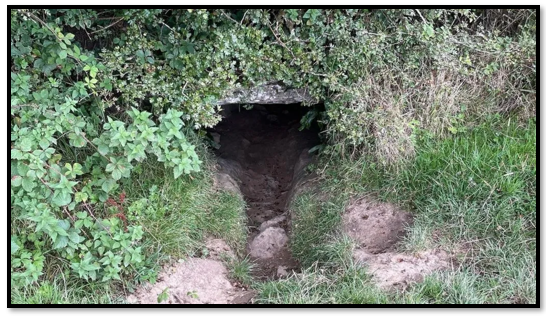
This cillín is hidden in a large copse of hazel trees on a slight height to the east of the local road running through Carrowgar. The cillín lies behind a grazing field, a short distance in. At first glance the site resembles a ring-fort, but it is shown as an elongated oval space on the 1840 Ordnance Survey map and recorded as a ‘Burial Ground for Children’. Courtesy Michael Houlihan.
https://heritage.clareheritage.org/places/the-clare-cillin-survey/cillin-at-carrowgar-quin
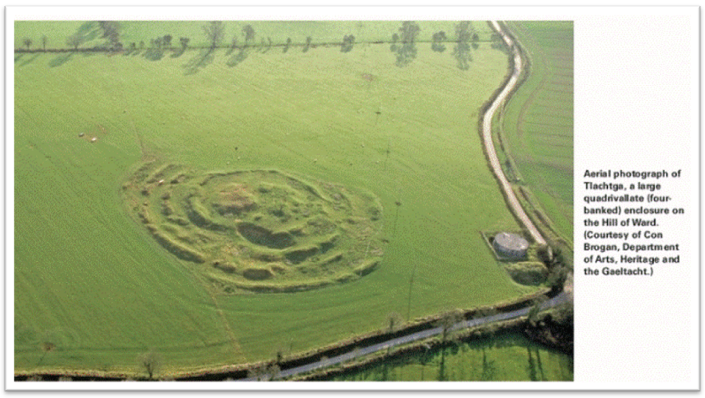
CL042–050 Enclosure
Some baptismal records in 1800’s in Carugar/Carhugar
| Date | Child’s name | Father’s F/N | Mother’s name | Sponsors | ||
| ??.02.1836 | Miss | Gleeson | Michael | Meany | John Nash, Miss Meany | |
| 18.03.1838 | Mary | Gleeson | Michael | Meany | Margaret | Bridget Meaney |
| 10.09.1833 | Daniel | Hayes | William | Taylor | Margaret | Dennis Flaherty, Nancy Lynch |
| 21.01.1818 | Brigid | Manneen | Patrick | MacNamara | Cate | Michael O’Loghlen, Mary Ryan |
| 14.06.1818 | John | Meany | James | MacNamara | Betty | Patt Morony, Jony Taylor |
| 20.10.1820 | John | Meany | James | MacNamara | Eliza | John Hogan, Catherine Clune |
| 28.01.1816 | Catherine | Meany | Pat | MacNamara | Elizabeth | James Meany, Sara MacNamara |
| 12.08.1816 | Daniel | Meany | Patrick | Hartigan | Mary | Tom Meany, Mary Meany |
| 12.10.1819 | Michael | Meany | Patt | Hartigan | Mary | Edmund Savage, Johanna Nash |
| 31.03.1816 | Anne | Molony | Daniel | Loghane | Anne | Mary Doogan |
| ??.09.1839 | Honora | Molony | James | Wolfe | Ellen | James Brazil, Mary Wolfe |
| 02.10.1820 | Nancy | Slattery | Patt | Taylor | Jony | James Meany, Margaret Flemon |
| 03.01.1855 | Bridget | Clune | James | Nash | Honora | Michael Clune, Mary Clune |
| 11.01.1857 | Mchael | Clune | James | Nash | Judy | Patt Clune, Catherine Clune |
| 28.04.1859 | Johanna | Clune | James | Nash | Johanna | Michael Clune, Anne Clune |
| 28.06.1868 | George | Clune | James | Nash | Joanna | Michael Clune, Kate Clune |
| 09.08.1863 | Sarah | Clune | Janes | Nash | Johanna | Tom Clune, Fanny Fallon |
| 28.02.1855 | Michael | Clune | Matt | Maneen | Bridget | Martin Clune, Lucy Clune |
| 13.09.1857 | Mary | Clune | Matt | Mangan | Bridget | John Mangan, Margaret Reddin |
| 13.01.1855 | Bridget | Clune | James | Nash | Johanna | Michael and Mary Clune |
| ??.02.1836 | Mary | Clune | Pat | Meaney | Ann | Thomas Clune, Briget Meaney |
| 15.07.1856 | Patt | Hanberry | Pat | Hill(?) | (?) | John Hill, Lucy Hanberry |
| 02.02.1867 | Bridget | Hanberry | Patt | Hill | Kate | Kate Rochford |
| 30.03.1862 | Margaret | Hanbury | Patt | Hill | Catherine | Anne Hanbury |
| 26.07.1863 | Mary | Hanbury | Patt | Hill | Catherine | Margaret Meere |
| 23.02.1856 | Patrick | Hill | John | Daly | Margaret | James McDonnell, Margaret McDonnell |
| 23.03.1858 | Mary | Hill | John | Daly | Margaret | Margaret Molony |
| 15.04.1860 | John | Hill | John | Daly | Margaret | Martin Rochford, Mary Clune |
| 14.07.1875 | Michael | Markham | J | Clune | Mary | Michael Clune, Kate Rochford |
| 06.07.1871 | Mary Anne | Markham | Jeremiah | Clune | Mary | Michael Clune, Hannah Markham |
| 07.12.1872 | Thomas | Markham | Jerry | Clune | Mary | James Clune, Anne Clune |
| 29.04.1880 | John | McHugh | John | Carney(Canny?) | Bridgid | Thomas McGrath, Bridgid Murphy |
| 26.04.1874 | Thomas | McNamara | Pat | Ryan | Bridget | Margaret Hill |
| 26.01.1879 | Anne | McNamara | Pat | Ryan | Bridgid | Kate McNamara, Michael Hennessy |
| 28.04.1872 | Eliza | McNamara | Patrick | Shine | Bridget | Kate Rochford |
| 08.12.1860 | James | Rochford | John | Boland | Winifred | Bridget Meere |